Proper Torque for Implant Prosthetic Components: How to Determine and Apply It
Proper torque depends on the component, screw, and connection used. Learn how to verify the manufacturer's recommendation and follow a safe protocol for implant-supported restorations.

The proper torque for an implant prosthetic component is the value specified by the manufacturer for the exact combination of component, screw, and connection being used. There is no universal value for every implant-supported restoration: safe application requires identifying the assembly, verifying complete seating, and using a torque wrench whose proper function has been checked.
What Does Torque Mean for an Implant Prosthetic Component?
Torque is the rotational force applied to turn an object, such as the screw that secures an abutment or implant-supported restoration. In dentistry, it is typically expressed in newton-centimeters, abbreviated N·cm.
During tightening, some of this action overcomes friction between surfaces, while some produces elastic elongation of the screw. This elongation generates preload, which provides the clamping force that holds the connection together.
Torque and preload are therefore related, but they are not synonymous. Even when the instrument indicates the same torque, changes in friction, screw condition, or surface condition can alter the resulting preload.
Why Does Preload Matter in Implant-Supported Restorations?
Adequate preload helps keep the joint stable during chewing. When preload is insufficient or lost, micromovement and loosening can occur.
Tightening beyond the specification, however, does not necessarily make the assembly more secure. Excessive torque can cause permanent deformation, thread damage, or screw fracture. The goal is to achieve the condition intended for that system—not to apply as much force as possible.
Read also: Passive Framework Fit in Multi-Unit Implant-Supported Prostheses · Prosthetic Screw Loosening: Causes and Solutions · Emergence Profile in Implant Restorations: Planning, Esthetics, and Health
How to Determine the Correct Torque for an Implant Prosthetic Component
The primary reference should be the manufacturer's current instructions for use for the specific component. Technical catalogs and official support can supplement this information, provided they allow you to identify the exact product being used.
It is not safe to select a torque value based only on the component's appearance, the apparent screw diameter, or your recollection of a similar case.
Before final tightening, confirm:
- Manufacturer and identification of the receiving implant or intermediate abutment.
- Connection type and prosthetic platform.
- Product code and indication for the component being placed.
- Corresponding screw, including any material or coating characteristics.
- Recommended driver.
- Torque and application conditions specified in the instructions for use.
Abutment Torque May Differ From Prosthetic Screw Torque
A restoration may have more than one screw-retained interface. For example, there may be a connection between the implant and an intermediate abutment, and a separate connection between that abutment and the prosthesis.
These interfaces may use different screws and require different torque values. The tightening specification for the abutment should not automatically be applied to the screw that secures the crown or prosthetic framework.
Likewise, implant insertion torque in bone should not be confused with prosthetic screw tightening torque. These procedures involve different objectives, interfaces, and criteria.
Why Is There No Universal Prosthetic Torque Chart?
Joint behavior depends on connection design, screw dimensions, materials, surface treatment, and the conditions specified by the manufacturer. A generic chart can obscure critical differences between components that look similar.
The comparison below helps organize your review of technical information, but it does not replace product documentation.
| Clinical situation | Information to verify | Error to avoid |
|---|---|---|
| Abutment secured directly to the implant | Torque for the abutment–screw assembly in that connection | Using the torque specified for another platform |
| Screw-retained prosthesis on an intermediate abutment | Torque for the corresponding prosthetic screw | Repeating the torque used for the intermediate abutment |
| Provisional component | Specific indication and protocol | Assuming it follows the definitive component's protocol |
| Component from another manufacturer | Declared compatibility and instructions for the assembly | Assuming an apparent fit is sufficient |
| Custom abutment or titanium base | Receiving system, screw, and applicable protocol | Selecting torque based only on the crown material |
In multiplatform workflows, traceability deserves particular attention. The ability to work with different systems does not eliminate the need to verify each interface and its documentation.
Step-by-Step Protocol for Torquing Implant Prosthetic Components
1. Identify Every Element of the Assembly
Organize the implant, component, and screw information before placement. For patients treated at another practice, seek clinical records, product labels, and information from the treating clinician.
When identification is uncertain, do not proceed based on visual similarity alone. Clinical and radiographic assessment may help, but they do not always allow reliable identification of the system.
2. Inspect the Component and Screw
Check the integrity of the threads, screw head, contact surfaces, and driver engagement. Deformation, wear, or an unknown history of use requires reassessment.
Do not assume that reusing screws is safe. Follow the manufacturer's requirements for use and replacement, particularly after repeated tightening, damage, or a mechanical complication.
3. Prepare the Interface According to the Instructions
Tissue remnants, blood, restorative materials, or other contaminants may interfere with seating and joint behavior.
Clean and prepare the interface according to the system's instructions. Do not lubricate the screw on your own initiative: changes in friction can alter preload at the same torque. Application conditions must match the technical recommendations.
4. Confirm Complete Seating Before Final Torque
The component must be correctly positioned, without interference that prevents proper fit. Excessively tight proximal contacts, soft-tissue interference, or framework misfit can create resistance that does not represent proper tightening.
Torque should not be used to “pull” a misfitting component into position. When indicated, a radiograph with an appropriate projection can help assess the interface, but it does not replace clinical inspection.
5. Use the Appropriate Driver and Torque Wrench
The driver must match the screw design and be in good condition. Maintain complete engagement and the alignment required by the system during tightening.
Apply torque with an appropriate instrument, following its operating instructions. Hand feel does not replace instrument-controlled tightening when a torque value is specified.
6. Follow the Tightening Sequence
For prostheses with multiple screws, evaluate framework fit before final fixation. Use a sequence consistent with the system's protocol and the configuration of the restoration.
An organized sequence helps with seating, but it does not correct a lack of passive fit. Progressively tightening a misfitting framework can introduce unwanted stresses.
7. Verify, Document, and Finish
After tightening, check stability, fit, and occlusion. Document the component, screw, applied torque, and any relevant complications.
Protection and sealing of the screw access channel should allow future maintenance and follow the restorative protocol. Advise the patient about signs that warrant a follow-up visit, such as mobility, new clicking sounds, or a change in the bite.
Is Retightening the Screw After a Few Minutes Necessary?
Surface settling can occur after initial tightening, reducing preload. For this reason, some protocols include a second controlled application of torque after a specified interval.
However, retightening is not a universal rule for all components. Its indication, timing, and technique should follow the manufacturer's guidance and the applicable protocol.
Retightening does not mean increasing torque above the recommended value. It also does not mean repeatedly activating the instrument without a defined rationale. Recurrent loss of stability requires investigating the cause rather than simply repeating the tightening procedure.
Dental Torque Wrenches: Accuracy Is Part of Treatment
The torque wrench must be in proper working condition. Wear, debris, incorrect assembly, or damage can compromise torque application.
Care includes:
- Cleaning, reprocessing, and sterilization according to the instrument's instructions.
- Inspection for integrity and correct assembly before use.
- Correct reading of the scale or indicating mechanism.
- Verification and calibration according to the manufacturer's recommendations.
- Removal from service whenever improper function is suspected.
Instruments have different operating and reading mechanisms. The team should understand the available model, including how to apply force and interpret its torque indication. Do not assume that all instruments work the same way.
Screw Loosening Does Not Always Mean Insufficient Torque
The first response to a loose prosthesis is often to retighten it. However, loosening is a clinical sign that requires diagnosis.
Possible causes include inappropriate torque, incomplete seating, prosthetic misfit, component incompatibility, screw wear, and unfavorable loading conditions. Inadequate occlusal contacts, cantilevers, and parafunction may also contribute, depending on the case.
What Should You Evaluate When Loosening Recurs?
Distinguish mobility of the prosthesis from mobility of the implant itself. Then examine the interfaces, component integrity, framework fit, and distribution of occlusal contacts.
It may be necessary to remove the restoration, replace components as indicated, and reassess the prosthetic design. In some situations, treatment requires changes beyond the screw. Empirically increasing torque can mask the problem and worsen mechanical damage.
Prosthetic Torque in Digital Workflows and CAD/CAM Libraries
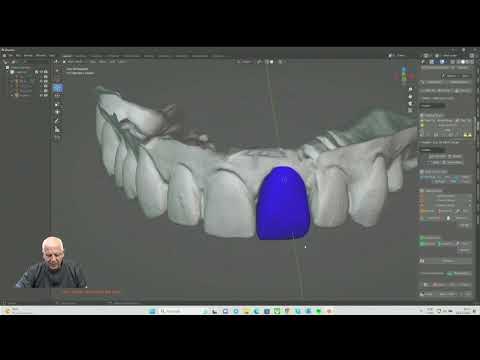
Digital planning improves case organization, but it does not eliminate clinical verification. A CAD/CAM library must match the physical component, platform, and intended indication.
Selecting similar geometry in the software does not establish compatibility. Likewise, a well-designed restoration does not guarantee proper seating if the base, screw, or connection is inappropriate.
In a digital workflow, maintain traceability of the library used, the planned component, and the component actually placed. For systems with angulated screw access channels, also confirm the specific driver, angulation limits, and torque protocol.
In Clinical Practice
In Dr. Welson Pimentel's approach, which draws on experience in prosthodontics, implant dentistry, and digital planning, tightening should be understood as part of verifying the entire rehabilitation—not as an isolated step at the end of an appointment.
The central guidance is simple: before asking how much torque to apply, confirm exactly what will be tightened and whether the assembly is fully seated. This approach connects planning, component selection, laboratory fabrication, and clinical delivery.
A checklist shared by the practice and laboratory helps prevent discrepancies between the prescribed component and the one delivered. For patients, the message is equally important: a prosthesis that has started moving needs evaluation, even without pain. Do not try to tighten it at home or keep testing its mobility.
Have questions about your treatment? Book an assessment at Dr. Welson Pimentel’s dental practice in Botafogo, Rio de Janeiro, to discuss your needs and care options. Visit the dental practice
Conclusion
Proper torque for implant prosthetic components depends on precise identification of the assembly and consultation of the manufacturer's recommendations. Complete seating, compatibility, screw integrity, and torque wrench performance are just as important as the applied value.
When loosening occurs, the safe approach is to investigate the cause, not to increase force indiscriminately. For help organizing digital planning and component selection for your implant restorations, turn to Planejamento Express or speak with Dr. Welson Pimentel.
Frequently asked questions
What is the correct torque for an implant prosthetic component?
It is the torque specified by the manufacturer for the exact combination of component, screw, and connection. There is no universal value that applies to all implant-supported restorations.
Is abutment torque the same as prosthetic screw torque?
Not necessarily. The implant–abutment connection may require a different torque than the screw securing the prosthesis to the intermediate abutment. Check the specification for each interface.
Can I increase torque to prevent screw loosening?
Do not exceed the manufacturer's recommendation. Excessive torque can deform or fracture components. Recurrent loosening requires evaluation of fit, compatibility, component integrity, and occlusal conditions.
Is retightening the screw after a few minutes mandatory?
Not for every system. Some protocols call for reapplying torque after initial settling, but the indication and interval must follow the manufacturer's instructions.
Can hand tightening replace a dental torque wrench?
Not when a torque value is specified for placement. Hand feel does not provide the same reliable control as an appropriate instrument whose proper function has been verified.
What should I do if my implant-supported prosthesis is loose?
Seek dental evaluation, even if there is no pain. Avoid chewing in that area, and do not try to tighten the prosthesis at home. The source of the mobility must be identified before repair.
Dental care in Botafogo · Rio de Janeiro
Your smile deserves personalized care
Talk to Dr. Welson Pimentel about implants, prosthetics and oral health. An assessment is the first step toward understanding the right care for you.
- ✓ Dental implants
- ✓ Dental prosthetics
- ✓ Oral health