Prosthetic Screw Loosening: Causes and Solutions
A loose implant-supported restoration may indicate screw loosening, but a diagnosis is needed to rule out other problems. Learn about the causes, warning signs, and treatment options.

Implant screw loosening is a mechanical complication in which the joint between prosthetic components loses stability, allowing the crown, abutment, or prosthetic framework to move. It may be related to improper tightening, misfit, incompatible components, or unfavorable chewing forces; resolving it requires identifying the cause before retightening or replacing the screw. A loose restoration does not necessarily mean that the implant has lost its integration with the bone.
What Is Prosthetic Screw Loosening?
In an implant-supported restoration, several parts work together: the implant placed in the bone, intermediate components when used, the restoration, and their respective fasteners. Depending on the system, one screw may secure the abutment to the implant and another may attach the prosthesis to the abutment.
For this reason, the phrase “loose implant screw” is imprecise. The first step is to determine which interface has lost stability and whether the problem involves loosening alone or damage to the components as well.
The screw acts as a fastener. When the recommended torque is applied, it undergoes a small amount of elastic elongation and generates a clamping force called preload. This force keeps the connected surfaces under compression.
If the clamping force becomes insufficient to withstand functional loads, micromovement and progressive loss of stability may occur. The problem should not be viewed simply as insufficient tightening: an underlying mechanical or prosthetic factor is often involved.
Read also: Passive Framework Fit in Multi-Unit Implant-Supported Prostheses · Proper Torque for Implant Prosthetic Components: How to Determine and Apply It · Emergence Profile in Implant Restorations: Planning, Esthetics, and Health
What Causes Implant Screw Loosening?
Screw loosening is usually multifactorial. A restoration may use appropriate components yet still become unstable if seating is compromised or forces are distributed unfavorably.
Improper Torque and Loss of Preload
Torque is the rotational force applied when tightening a screw. It must follow the manufacturer’s recommendation for that specific component and application, using an appropriate instrument in proper working condition.
Insufficient tightening may fail to generate the necessary preload. Excessive torque, however, can damage the screw, threads, or connection. “Tightening it harder” is therefore not a universal solution.
Microscopic surface irregularities may also settle after tightening, reducing some of the initial preload. When the manufacturer’s protocol recommends retightening, that guidance should be followed rather than applying a single interval or rule to every system.
Prosthetic Misfit and Incomplete Seating
A crown or framework that does not seat properly may appear secure even when interference exists between the components. Interposed tissue, debris, overly tight proximal contacts, or framework misfit are possibilities to investigate.
In restorations supported by multiple implants, a poorly fitting framework can introduce stress into the assembly. The screw should not be used to “pull” an ill-fitting framework into position.
Incompatible or Unidentified Components
Diameter, connection geometry, screw head design, length, and thread characteristics all influence joint performance. Two components that look similar are not necessarily interchangeable.
For older restorations, identifying the implant and its components is a critical step. Multiplatform systems require compatibility verification for each indication; the term does not mean that a component fits every implant.
Overload, Bruxism, and Unfavorable Occlusal Contacts
Heavy or poorly distributed contacts can increase mechanical stress on the restoration. Bruxism, clenching, contacts during lateral movements, cantilever extensions, and certain relationships between crown height and implant position may also contribute.
This does not mean that every episode of loosening is caused by bruxism. The assessment must consider the entire assembly rather than attributing failure to a single habit without examining fit, components, and the tightening protocol.
Wear or Damage to the Screw and Connection
A screw with deformation, head damage, or altered threads may no longer function properly. The connection may also develop wear after prolonged movement.
Reuse must follow the manufacturer’s instructions and account for the component’s condition. A questionable screw should not be retained simply because the driver still engages it.
Symptoms of a Loose Prosthetic Screw: What to Watch For
The most common sign is a feeling that the tooth or restoration moves. Some patients also report:
- Clicking or a snapping sensation while chewing.
- A change in how the teeth fit together when closing.
- Discomfort when biting into food.
- A sensation of a gap opening or increased food trapping.
- Gum irritation around the restoration.
- Partial or complete detachment of a component.
The absence of pain does not rule out a mechanical complication. Loosening may begin subtly and progress while the patient continues chewing normally.
Bleeding, drainage, swelling, or persistent pain requires evaluation of the tissues surrounding the implant. These signs may coexist with a mechanical problem, but they do not establish its cause on their own.
Loose Restoration or Mobile Implant: What Is the Difference?
A loose crown may result from screw loosening, loss of cement retention, or fracture. Mobility of the implant itself within the bone is a different and potentially more serious finding.
| Possible situation | What may be happening | Initial professional approach |
|---|---|---|
| Mobile crown or abutment | Loosening of a screw-retained joint | Locate the interface and inspect the components |
| Loose cement-retained crown | Loss of cement retention | Evaluate the abutment, fit, and cause of loosening |
| Mobility with a damaged component | Fracture of a screw or another component | Identify the damage and plan removal or replacement |
| Mobile implant body | Possible loss of osseointegration or another structural failure | Investigate the condition of the implant and surrounding tissues |
Patients cannot reliably distinguish these conditions at home. A clinical examination, often combined with radiographs, is needed to guide treatment.
How Do Dentists Diagnose Screw Loosening?
The investigation should be systematic, especially when the problem has occurred before. Repeated retightening without a diagnosis can mask a problem with treatment planning, fit, or compatibility.
1. Review the Restoration’s History
It is important to determine when the restoration was placed, when mobility began, whether trauma occurred, and how many times the screw has been retightened. Reports of clenching, bite changes, and previous repairs help guide the examination.
2. Identify the System and Components
Clinical records, prosthetic documentation, and information from the clinician who provided the restoration can help with identification. Drivers and screws should not be selected through indiscriminate trial and error.
3. Locate the Mobility and Evaluate the Tissues
The dentist determines which part is moving and examines the peri-implant tissues. A loss of prosthetic retention must be distinguished from a problem involving the implant or supporting bone.
4. Inspect Fit and Integrity
When indicated, the restoration is removed to evaluate contact surfaces, threads, the screw head, and signs of deformation. Radiographs can help assess seating and bone conditions, but they do not replace clinical inspection.
5. Analyze Occlusion and Prosthetic Design
The evaluation includes contacts during closure and mandibular movements, as well as extensions, restoration dimensions, and support distribution. Corrective treatment depends on the findings, not simply on the presence of a mark from articulating paper.
How Is Implant Screw Loosening Treated?
Treatment varies with the condition of the restoration and the identified cause. In a favorable situation, it may involve cleaning according to the system’s protocol, confirming complete seating, evaluating or replacing the screw, and applying the recommended torque.
In other cases, occlusal adjustments, correction of proximal contacts, component replacement, or fabrication of a new restoration may be necessary. When significant misfit is present, retightening does not address the underlying problem.
When Should the Prosthetic Screw Be Replaced?
Replacement may be indicated when there is deformation, wear, head or thread damage, suspected mechanical compromise, or a manufacturer requirement. The decision should account for the history and condition of the entire assembly.
Compatibility of the new screw must be confirmed. Matching the driver engagement alone is not enough: geometry, threads, and intended application must also be appropriate.
What If the Screw Is Fractured?
Removing a fragment requires planning, visibility, and appropriate instruments. Improvised attempts can damage the internal connection and make the assembly harder to restore.
A fractured screw does not always mean the implant is lost. The possibility of salvaging it depends on the fragment’s location, access, and the integrity of the remaining structures.
Will a Night Guard Solve the Problem?
An occlusal splint may be part of a protective strategy for selected patients. However, it does not correct incompatible components, misfit, or improper torque, nor is it guaranteed to eliminate bruxism.
Its use should be accompanied by an evaluation of the restoration and clinical follow-up. It is a complementary measure, not a substitute for diagnosis.
What Should You Do If an Implant-Supported Restoration Becomes Loose?
Contact your dentist as soon as you notice mobility. Until your evaluation:
- Avoid chewing on the affected area.
- Choose soft foods and avoid hard or sticky foods.
- Do not try to tighten the screw with household tools.
- Do not use glue or adhesives to secure the restoration.
- If a component comes off completely, keep it in a clean container and bring it to your appointment.
- Do not try to put loose components back in your mouth.
Continuing to use a mobile restoration can contribute to fracture, wear, and tissue irritation. If you suspect that a component has been inhaled, especially with sudden coughing or difficulty breathing, seek emergency medical care.
In Clinical Practice: Treat the Cause, Not Just the Loose Screw
In Dr. Welson Pimentel’s clinical approach, experience in prosthodontics, implant dentistry, and digital treatment planning supports an integrated assessment: the implant, connection, component, restoration, and occlusion must be evaluated as a system.
The central question is not just “What torque should be applied?” but “Why did this joint lose stability?” This shift in focus is especially important for recurrent loosening and restorations with undocumented implant systems.
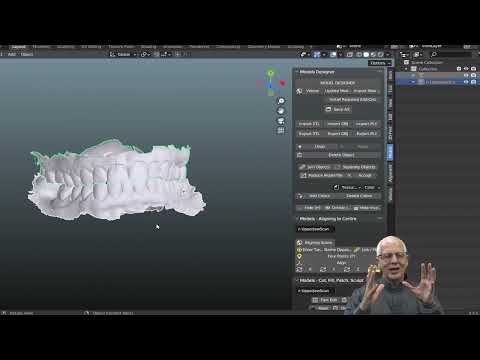
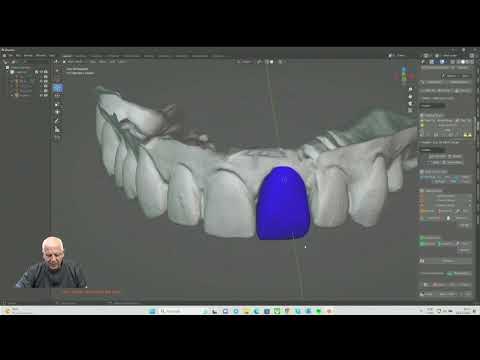
A digital workflow can support a review of prosthetic design, screw access position, and available space. However, digital files and CAD/CAM libraries must match the actual components; an incorrect library can compromise the outcome even when the design looks appropriate on screen.
How Can Recurrent Screw Loosening Be Prevented?
Prevention begins with treatment planning and continues through maintenance. Important measures include:
- Selecting components with documented compatibility.
- Confirming complete seating before final tightening.
- Using an appropriate torque wrench maintained according to the manufacturer’s guidance.
- Following component-specific installation instructions.
- Evaluating the distribution of chewing forces.
- Documenting the system, components, and procedures performed.
- Scheduling individualized follow-up and educating the patient about mobility.
Maintenance does not mean routinely disassembling or retightening every restoration. The need for intervention depends on the examination, symptoms, and recommendations for the system used.
Have questions about your treatment? Book an assessment at Dr. Welson Pimentel’s dental practice in Botafogo, Rio de Janeiro, to discuss your needs and care options. Visit the dental practice
Conclusion
Implant screw loosening deserves attention even when it causes no pain. Although many cases can be resolved while preserving the restoration, the outcome depends on identifying the cause and checking component integrity before tightening.
Have questions about your treatment? Book an assessment at Dr. Welson Pimentel’s dental practice in Botafogo, Rio de Janeiro, to discuss your needs and care options. Visit the dental practice
Frequently asked questions
Can an implant screw loosen without causing pain?
Yes. Loss of stability may cause only mobility, clicking, or a change in the bite. Even without pain, the restoration should be evaluated to help prevent component wear or fracture.
Does a loose implant crown mean the implant has failed?
Not necessarily. Mobility may be limited to the crown, abutment, or screw. Mobility of the implant itself within the bone is a different condition that requires a specific investigation.
What is the correct torque for tightening a prosthetic screw?
There is no universal torque value. The value must follow the manufacturer’s recommendation for the specific component and application, using a compatible driver and an appropriate torque wrench.
Why does the prosthetic screw keep loosening?
Recurrent loosening may involve misfit, incompatible components, screw damage, improper tightening, or unfavorable forces. Retightening without investigating these factors may not resolve the underlying cause.
Can I tighten an implant screw at home?
No. Improper tools and uncontrolled force can damage the assembly, and there is a risk of swallowing or inhaling components. Avoid chewing on the affected area and contact your dentist.
Dental care in Botafogo · Rio de Janeiro
Your smile deserves personalized care
Talk to Dr. Welson Pimentel about implants, prosthetics and oral health. An assessment is the first step toward understanding the right care for you.
- ✓ Dental implants
- ✓ Dental prosthetics
- ✓ Oral health