Implant Overdentures: Benefits and Attachment Systems
An overdenture combines the easy removal of a denture with the retention provided by implants. Explore its indications, common attachment systems, and the considerations that guide treatment selection.

An implant overdenture is a removable prosthesis that connects to implants through attachments, offering greater retention and stability than a conventional complete denture in many cases. Its main attachment systems include bar-clip, ball, and low-profile attachments; selection depends on anatomy, implant distribution, restorative space, and the patient's ability to maintain oral hygiene.
What Is an Implant Overdenture, and How Does It Work?
An overdenture replaces the teeth in one arch and can be removed by the patient for cleaning. Unlike a conventional complete denture, which relies primarily on tissue adaptation and anatomical conditions to stay in place, it uses devices connected to implants to resist displacement.
These devices are called attachments or retention systems. One component connects to the implants or a bar; the corresponding component is incorporated into the denture base.
It is important to distinguish retention from support. Retention is resistance to dislodgment; support is resistance to tissueward movement during chewing. Some overdentures receive substantial support from the mucosa, while others are designed for the implants to play a greater role in supporting loads.
Therefore, a denture that “snaps onto implants” does not necessarily stop exerting pressure on the gums. This distinction affects base design, component selection, and the need for relining over time.
Read also: Passive Framework Fit in Multi-Unit Implant-Supported Prostheses · Proper Torque for Implant Prosthetic Components: How to Determine and Apply It · Prosthetic Screw Loosening: Causes and Solutions
Who May Be a Candidate for a Removable Implant Denture?
An overdenture may be considered for people missing all teeth in one arch, particularly when a conventional denture provides insufficient retention, moves during speech, or is difficult to adapt to.
Situations that warrant evaluation include:
- Lower denture instability associated with ridge resorption.
- The need to replace lost gingival volume and provide lip support.
- A preference for a removable option with easier access for cleaning.
- Difficulty cleaning beneath certain fixed prosthesis designs.
- Anatomical or financial limitations that affect rehabilitation options.
Treatment selection requires an assessment of overall health, bone and tissue conditions, the relationship between the arches, and the patient's willingness and ability to attend maintenance visits. Poorly controlled systemic diseases, active oral inflammation, and other risk factors must be considered before surgery.
Difficulty with oral hygiene does not automatically make an overdenture the right choice. The patient must be able to remove, clean, and reinsert the denture or have help from an instructed caregiver. Excessive retention can also make use difficult for people with limited dexterity.
What Are the Benefits of Implant Overdentures?
Greater Retention and Functional Confidence
Connecting the denture to implants can reduce unwanted movement during speech and chewing. Clinical studies generally report improvements in satisfaction and quality of life in selected patients, particularly when rehabilitating an edentulous mandible.
This does not mean the denture will be completely motionless. Certain systems allow controlled movement to accommodate differences in how implants and supporting tissues respond to loading.
Direct Access for Cleaning
Removing the denture allows the patient to see and clean its components, as well as the abutments or bar. This access can be beneficial, but the prosthetic design must allow cleaning aids to reach these areas without creating inaccessible spaces.
Replacement of Missing Teeth and Tissues
The overdenture base can replace some of the lost tissue volume and contribute to lip support. In certain patients, this feature helps address esthetic needs that depend on more than the position of the denture teeth alone.
Potentially Lower Initial Treatment Costs
In some treatment plans, an overdenture offers a less complex solution than certain fixed restorations. However, this is not always the case: the number of implants, bars, components, materials, and anatomical conditions all affect cost.
Comparisons should also account for maintenance, replacement of retentive elements, and potential repairs—not just initial delivery.
Overdenture Attachment Systems: Key Differences
No single system is superior in every situation. Selection should balance retention, biomechanical behavior, available space, and ease of maintenance.
| System | How it works | Potential benefits | Key considerations |
|---|---|---|---|
| Bar-clip | A bar connects the implants and engages clips or other retainers in the denture | Splints the implants and allows retention control through the design | Requires adequate space and cleaning beneath the bar |
| Ball attachment | Ball-shaped abutments connect to matrices in the denture | Relatively simple configuration and direct access to the abutments | Implant divergence and matrix wear must be evaluated |
| Low-profile attachment | Compact abutments connect to retentive inserts | May benefit cases with limited vertical space | Tissue height, path of insertion, and angulation limits are critical |
Bar-Clip: Retention With Splinted Implants
In a bar-clip system, a framework connects the implants, and retentive components secure the denture to it. The design can allow different types of movement, ranging from greater rotational freedom to more restrictive configurations.
A bar should not be selected based solely on its appearance or presumed strength. Its shape, span, retainer positions, and relationship to the tissues must be compatible with the intended support and chewing loads.
Space must also be allocated for the bar, retainers, base, and denture teeth. Insufficient space can lead to excessive bulk, a weakened denture, or compromised esthetics and speech.
Ball Attachments: Individual Implant Retention
Ball attachments use individual abutments that connect to matrices incorporated into the denture. Depending on the system, retention may involve elastomeric rings or other mechanisms.
They typically provide direct access for cleaning around each abutment. However, their performance depends on implant position, the path of insertion, and how the denture seats on its supporting tissues.
Implant divergence can increase wear and make insertion difficult. Limits on use and available methods of compensating for divergence should follow the manufacturer's instructions.
Low-Profile Attachments: Consider Space and Angulation
Low-profile attachments have a reduced height and, in many systems, replaceable inserts with different retention characteristics. They can be useful when vertical space is limited, but low profile does not mean no space requirements.
There must be room for the component, its housing, and a sufficient thickness of prosthetic material. Selecting the appropriate transmucosal height is also essential: a component positioned incorrectly relative to the gingiva can interfere with seating and cleaning.
Some systems offer features to accommodate divergence. These features have specific limits and should not be used to justify inappropriate implant positions.
How Many Implants Are Needed for an Overdenture?
There is no single number that applies to every arch. In the mandible, a two-implant-retained overdenture is a widely studied and commonly used approach for selected patients, generally with the mucosa contributing to support.
In the maxilla, bone quality, implant distribution, and biomechanical behavior often require a different strategy. More implants are commonly considered, along with splinting them through a framework when indicated.
The decision depends on:
- Available bone volume and quality.
- The extent and anatomy of the residual ridge.
- The opposing arch and magnitude of loading.
- Implant distribution and desired support.
- Restorative space, base design, and hygiene conditions.
A mandibular treatment plan should not simply be duplicated in the maxilla. Likewise, the possibility of reducing palatal coverage requires a specific assessment: it is not a guaranteed feature of every maxillary overdenture.
Overdentures vs. Fixed Implant Prostheses: How Do They Compare?
The most noticeable difference is removability. The patient removes an overdenture; a fixed prosthesis stays in place and is removed by the dentist when necessary.
A fixed prosthesis may better meet the expectations of someone who does not want to remove their teeth. However, it requires appropriate planning and access for cleaning beneath the framework. An overdenture may make direct cleaning and tissue replacement easier, but patients must adjust to a removal routine and the attachment system.
Neither option eliminates the need for follow-up. Fixed prostheses can also experience wear, fractures, and component maintenance needs.
The choice should be based on the patient's anatomy and goals, without treating an overdenture as inherently inferior. A properly indicated removable treatment may be more appropriate than a fixed option that cannot be adequately cleaned or has unfavorable contours.
Implant Overdenture Planning: Step by Step
1. Assess Health, Anatomy, and Expectations
The consultation should address systemic conditions, dental history, concerns about previous dentures, habits, and the ability to maintain oral hygiene. Photographs, a clinical examination, and indicated imaging help define limitations and possibilities.
2. Define the Prosthesis Before Implant Positions
Tooth position, lip support, vertical dimension, and the relationship between the arches guide treatment planning. This step helps prevent implants from being placed in unfavorable locations simply because bone is available there.
3. Measure Space and Select the Attachment System
The system must fit within the prosthesis while preserving sufficient material around the components. Gingival height, path of insertion, and access for maintenance must also be considered.
4. Integrate Records Into Digital Planning
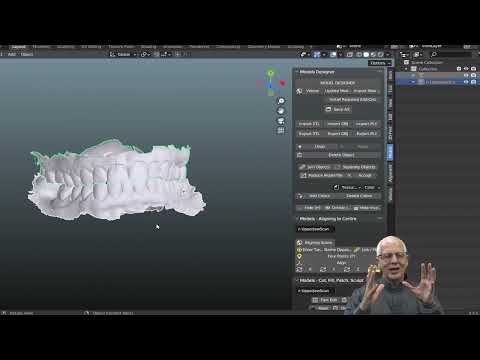
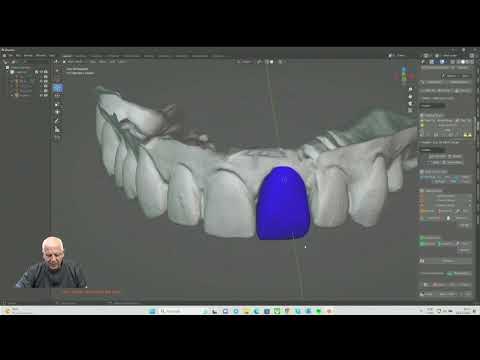
CBCT imaging, digital scans, and prosthetic reference records can be combined to evaluate implant positions and the feasibility of guided surgery. In edentulous patients, mucosal mobility and the absence of reference landmarks require particular attention when acquiring and aligning records.
5. Verify the Prosthesis and Monitor Adaptation
After the indicated surgical and healing stages, the prosthetic workflow should verify seating, retention, occlusion, esthetics, and ease of removal. The patient needs practical instructions before beginning everyday use.
In Clinical Practice
Dr. Welson Pimentel's clinical perspective, developed over more than 30 years of practice integrating prosthodontics, implant dentistry, and digital planning, places prosthetic design at the center of decision-making. Choosing an attachment is only one part of treatment; understanding where the teeth will be and how the denture will be cleaned is equally important.
One fundamental principle is not to try to correct all denture movement by increasing retentive force. First, base adaptation, tissue support, occlusion, and component wear should be assessed. A denture that has lost support may remain overloaded even after its inserts are replaced.
Another important precaution is to record the manufacturer, model, and specifications of the installed components. Accurate identification simplifies replacement and helps prevent assumed compatibility between parts that look similar but have not been validated for use together.
Care and Maintenance of Removable Implant Dentures
An overdenture requires daily cleaning of both the denture and the components that remain in the mouth. The dentist should demonstrate which brushes and cleaning aids to use and recommend products compatible with the materials.
Daily care should include:
- Removing and inserting the denture along the instructed path without forcing the attachments.
- Cleaning the intaglio surface of the base and the areas around the attachment housings.
- Cleaning the abutments and spaces beneath the bar, when present.
- Avoiding home adjustments, glues, or abrasive products.
- Following individualized instructions for overnight removal and storage.
- Attending follow-up visits, even without pain.
Inserts, rings, and clips can lose retention with use. Replacement intervals vary by system and clinical conditions; there is no universal schedule.
Relining may also be necessary for dentures with mucosal support. Persistent sores, bleeding, discharge, pain, a sudden change in retention, or component mobility warrant evaluation. Implants do not eliminate the risk of peri-implant inflammation and bone loss.
Have questions about your treatment? Book an assessment at Dr. Welson Pimentel’s dental practice in Botafogo, Rio de Janeiro, to discuss your needs and care options. Visit the dental practice
Conclusion
An implant overdenture can offer greater stability, facilitate hygiene, and address the need to replace missing teeth and tissues. Its performance depends on appropriate case selection, planned support, and an attachment system compatible with the patient's anatomy, restorative space, and daily routine.
Have questions about your treatment? Book an assessment at Dr. Welson Pimentel’s dental practice in Botafogo, Rio de Janeiro, to discuss your needs and care options. Visit the dental practice
Frequently asked questions
Is an implant overdenture a fixed prosthesis?
No. It is a removable prosthesis connected to implants through attachments. Patients remove it themselves for cleaning, following their dentist's instructions.
Are two implants enough for an overdenture?
Two implants may be indicated for mandibular overdentures in selected patients. In the maxilla, treatment planning typically requires a different number and distribution. The decision depends on anatomy, loading, and the intended support.
What is the best attachment system for an overdenture?
No single system is best for every case. Bar-clip, ball, and low-profile attachments should be compared based on available space, implant positions, hygiene, and maintenance needs.
Can an upper overdenture leave the roof of the mouth uncovered?
In some cases, yes. Reducing palatal coverage depends on implant number and distribution, support, and prosthetic design. It should not be promised before an evaluation.
Is it normal for an overdenture to lose retention over time?
Retentive elements can wear and require replacement. Base adaptation, occlusion, and components must also be checked, because not all movement is caused by the attachments.
Can my existing denture be converted to an implant overdenture?
Sometimes, provided the denture has adequate fit, strength, tooth position, and space for the components. Otherwise, fabricating a new denture may be more appropriate.
Dental care in Botafogo · Rio de Janeiro
Your smile deserves personalized care
Talk to Dr. Welson Pimentel about implants, prosthetics and oral health. An assessment is the first step toward understanding the right care for you.
- ✓ Dental implants
- ✓ Dental prosthetics
- ✓ Oral health