Outsourced Digital Implant Planning: Benefits for Dentists
Outsourcing digital implant planning gives your practice access to specialized resources without bringing the entire workflow in-house. Explore the benefits, limitations, and criteria for choosing a technical partner.

Outsourced digital implant planning gives dentists access to a specialized team that integrates imaging, simulates implant positions, and develops solutions such as surgical guides and digitally planned provisional restorations. Its primary advantage is adding technical capabilities to the clinical workflow without performing every software and production step in-house, while keeping treatment decisions and approval with the treating dentist.
For outsourcing to work, however, simply sending a CBCT scan and waiting for a file is not enough. The process requires sharing clinical information, defining the restorative goal, and establishing clear communication among the practice, planning team, and laboratory.
What Is Outsourced Digital Implant Planning?
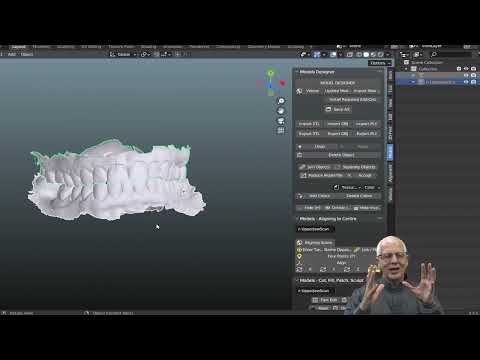
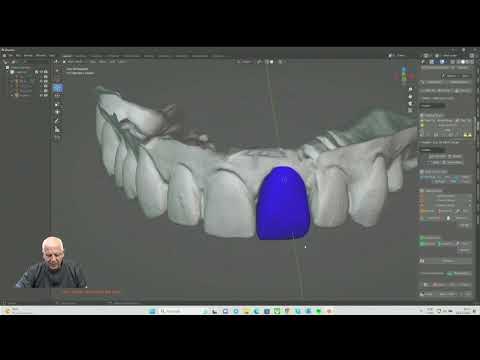
It involves hiring a specialized service to perform digital implant planning steps based on the records and instructions provided by the dentist. The scope may include image integration, a virtual diagnostic wax-up, implant simulation, restorative analysis, and surgical guide design.
Depending on the agreement, it may also include fabrication of guides, 3D anatomical models, crowns, and digitally planned provisional restorations. Planning, design, and fabrication are separate deliverables: confirm what is included before starting the case.
The technical partner organizes the data and develops a proposed plan for the dentist to review. This proposal does not replace a clinical examination, diagnosis, informed consent, or assessment of the patient's systemic health.
Outsourcing the Workflow Does Not Mean Delegating Clinical Decisions
The dentist remains responsible for evaluating the patient, recommending treatment, and approving clinical choices. Outsourcing provides support for visualizing options and performing digital tasks, but it does not automatically transfer responsibility for patient care.
Questions such as the need for grafting, timing of implant placement, loading protocol, and tissue management require clinical judgment. Software helps organize information; it does not independently determine treatment.
Read also: Outsourced Implant Planning: Why the Surgeon Must Validate the Guide Before Printing · Prosthetically Driven Implant Planning: The Tooth Leads, the Implant Follows · DICOM and STL Files: What They Are and How to Combine Them for Treatment Planning
Benefits of Outsourced Digital Implant Planning for Dentists
The benefit goes beyond using advanced software. It lies in establishing a process that considers surgical, restorative, and laboratory information before the procedure.
More Time for Clinical Activities
Operating software, checking files, correcting alignments, and preparing designs for fabrication require time and training. By outsourcing these steps, dentists can focus more attention on diagnosis, patient care, and treatment delivery.
This does not eliminate review time. The difference is replacing some operational work with a focused clinical review that has defined goals and approval checkpoints.
Access to Specialized Technical Expertise
Reliable planning depends on understanding anatomy, prosthodontics, components, digital libraries, and manufacturing limitations. It also requires recognizing when the available records cannot support a dependable proposal.
Specialized support can help identify incompatibilities among the selected implant, restorative component, digital library, and guided surgery system. This verification is especially relevant when multiple vendors participate in the same workflow.
Integration of Surgery and the Restorative Outcome
Implant position should not be selected solely on the basis of available bone. It must also be evaluated against tooth position, restorative space, emergence profile, screw access, and the patient's ability to maintain hygiene.
In prosthetically driven implant planning, the proposed restoration guides the surgical analysis. When bone volume does not allow the desired position, this limitation can be discussed in advance rather than discovered only during the restorative phase.
Less Need to Maintain an In-House Digital Infrastructure
Building an in-house operation may require software licenses, suitable computers, training, library updates, and quality control procedures. Bringing fabrication in-house adds further infrastructure and processing requirements.
Outsourcing allows practices to purchase services as needed. This may be appealing for practices with variable case volumes, although the financial benefit should be calculated individually, considering scope, revisions, logistics, and staff time.
In-House vs. Outsourced Planning: How Do They Compare?
No single model is ideal for every practice. The choice depends on case frequency, team experience, and the willingness to maintain an up-to-date digital infrastructure.
| Criterion | In-House Planning | Outsourced Planning |
|---|---|---|
| Software operation | Performed by the practice team | Performed by the contracted partner |
| Required infrastructure | Depends on which steps are handled in-house | May allow a leaner setup at the practice |
| Technical updates | Must be maintained internally | Should be assessed when choosing a partner |
| Revisions | Depend on staff availability | Depend on the agreed workflow and scope |
| Clinical communication | Primarily internal | Requires organized submissions and coordination between teams |
| Treatment approval | Treating dentist | Treating dentist |
A hybrid model is also possible: the dentist can perform the initial analysis and outsource detailed planning, guide design, or fabrication. The key is to define who performs and who checks each step.
How Outsourced Digital Implant Planning Works: Step by Step
A well-organized workflow begins before the software is opened. Record quality and clear instructions directly influence the usefulness of the plan.
1. Clinical Evaluation and Goal Setting
The dentist documents the patient's oral condition, health history, needs, and treatment alternatives. The dentist also communicates details that may not be evident in the files, such as limited mouth opening, tooth mobility, or tissue characteristics.
The goal should be specific: a single-tooth, multiple-tooth, or full-arch restoration, for example. Any unresolved questions about treatment suitability should accompany the request.
2. Submission of Imaging and Records
Required files vary by case but may include:
- Cone beam computed tomography (CBCT) scans in DICOM format.
- Intraoral or model scans in a format compatible with the workflow.
- A record of the interarch relationship.
- Relevant clinical photographs.
- A diagnostic wax-up or proposed restorative design, when available.
- Information about the intended implants, components, and instruments.
Screenshots from a CBCT scan are not equivalent to the volumetric dataset needed for planning. Likewise, an incomplete surface scan may compromise evaluation of guide support and fit.
3. Data Verification and Integration
The team checks file integrity and aligns the records. CBCT artifacts, distortions, and poorly defined areas can make this step more difficult.
If the data are insufficient, the workflow should allow for clarification or new records, as clinically indicated. Proceeding with inadequate information simply to meet a deadline can compromise the design.
4. Surgical and Restorative Proposal
Once the records are integrated, implant position, diameter, and length are evaluated in relation to the anatomy and proposed restoration. Components, instrument limitations, and surgical access are also considered.
When guided surgery is indicated, guide support, stability, fixation, and design are discussed. The choice of a tooth-supported, mucosa-supported, or bone-supported guide depends on the case characteristics and planned technique.
5. Dentist Review and Approval
The treating dentist reviews the proposal and requests adjustments when needed. This review should include not only 3D views but also relevant cross-sections, anatomical relationships, and restorative information.
Fabrication should proceed only after documented approval of the design. This reduces ambiguity about which version was authorized and helps maintain traceability.
6. Fabrication, Verification, and Clinical Use
If fabrication is included in the agreement, the approved design moves to production. Upon receipt, the dentist checks identification, integrity, fit, and compatibility with the instruments.
Cleaning, disinfection, or sterilization must follow the instructions applicable to the material and device. Before and during surgery, seating and stability must be confirmed rather than assuming that virtual planning guarantees clinical fit.
Guided Surgery: What Outsourcing Does Not Eliminate
Digital planning and guided surgery can help transfer the virtual plan to the clinical procedure. However, deviations between planned and actual outcomes can arise from image acquisition, alignment, fabrication, and clinical use.
The following therefore remain necessary:
- Careful evaluation of anatomical structures and safety margins.
- Verification of compatibility among the guide, sleeves, and instruments.
- Assessment of access, mouth opening, and irrigation.
- Confirmation of guide seating and stability.
- An alternative strategy if the device cannot be used appropriately.
Clinical literature recognizes both the usefulness and limitations of digital workflows. Guided surgery does not mean risk-free surgery, nor does it make every case suitable for a flapless approach or immediate loading.
A preplanned provisional restoration also does not guarantee immediate placement. That decision depends on clinical and intraoperative conditions, including implant stability and the restorative strategy.
How to Choose an Outsourced Digital Implant Planning Service
When selecting a service, look beyond the guide price or the visual presentation of the design. The service should provide enough information to support an informed clinical decision.
Important Questions to Ask Before Hiring a Service
- What records are required for my case?
- Does the scope include restorative planning, guide design, and fabrication?
- Who participates in the technical analysis, and how is clinical communication handled?
- How are components, digital libraries, and instruments checked?
- What deliverables will I receive to review the plan?
- How are adjustments, approval, and version control handled?
- What is the turnaround time after all adequate records have been received?
- How are patient data stored and shared?
Dental records contain sensitive personal information. Sharing must comply with applicable privacy requirements, including Brazil's General Data Protection Law (LGPD) where applicable and HIPAA for covered US entities and their business associates. Use a defined purpose, restricted access, and security measures appropriate for handling this information.
How to Evaluate the Cost of Outsourcing Planning
Compare proposals with the same scope. A quote for virtual implant positioning alone is not equivalent to one that includes a diagnostic wax-up, guide design, fabrication, and review support.
Also consider shipping, additional laboratory steps, and terms for changes after approval. The best value depends on the quality of the process, not simply the lowest initial price.
In Clinical Practice
From Dr. Welson Pimentel's clinical perspective, developed over more than 30 years of practice integrating implant dentistry, prosthodontics, and digital planning, the central question is: Does the proposed position allow a functional restoration that can be cleaned effectively and is consistent with the patient's anatomy?
An implant may appear well positioned in a 3D reconstruction yet still present restorative limitations. The reverse can also occur: a desirable restorative position may require additional procedures or a change in strategy.
For this reason, the conversation between the dentist and planning team needs to take place before fabrication. Information about soft tissue, esthetic expectations, interocclusal space, and access for maintenance can change the proposal.
Have questions about your treatment? Book an assessment at Dr. Welson Pimentel’s dental practice in Botafogo, Rio de Janeiro, to discuss your needs and care options. Visit the dental practice
Have questions about your treatment? Book an assessment at Dr. Welson Pimentel’s dental practice in Botafogo, Rio de Janeiro, to discuss your needs and care options. Visit the dental practice
Conclusion
Outsourced digital implant planning can expand a practice's technical capabilities, reduce its operational workload, and support integration between surgery and restorative care. Its value depends on adequate records, clear communication, system compatibility, and careful review by the treating dentist.
Effective outsourcing does not mean giving up clinical control. It means accessing specialized support to plan with better information. To evaluate the most appropriate workflow for your cases, speak with Dr. Welson Pimentel or explore the planning options available through Planejamento Express.
Frequently asked questions
What is included in outsourced digital implant planning?
It depends on the agreed scope. Services may include imaging integration, a virtual diagnostic wax-up, implant positioning, and guide design. Fabrication, anatomical models, and provisional restorations should be confirmed separately.
What files are needed to outsource implant planning?
Typically, the service requests a CBCT scan in DICOM format, dental arch scans, a bite registration, and clinical information. Photographs and additional restorative records may be needed depending on the case.
Who approves the outsourced digital implant plan?
The dentist responsible for treatment must review and approve the proposal before fabrication. Technical support does not replace diagnosis, treatment recommendations, or clinical judgment.
Is outsourcing digital implant planning more cost-effective?
It can be, especially when it avoids maintaining an underused in-house setup. The comparison should account for case volume, software licenses, training, operational time, fabrication, revisions, and logistics.
Does outsourced planning guarantee flapless surgery or immediate loading?
No. These approaches depend on anatomy, tissues, the surgical strategy, and intraoperative conditions. Digital planning supports decision-making but does not guarantee that these approaches will be feasible.
Do I need to be proficient with planning software to use Planejamento Express?
You do not need to personally perform the software steps included in the service. However, the dentist must provide adequate records, communicate clinical goals, and review the plan before approving it.
Dental care in Botafogo · Rio de Janeiro
Your smile deserves personalized care
Talk to Dr. Welson Pimentel about implants, prosthetics and oral health. An assessment is the first step toward understanding the right care for you.
- ✓ Dental implants
- ✓ Dental prosthetics
- ✓ Oral health