Implant Healing Abutments: Functions and How to Choose the Height
A healing abutment guides soft tissue healing around an implant. Its height should account for implant platform depth, the surrounding tissues, and the planned restoration.

An implant healing abutment is a temporary component that maintains an opening through the gingiva and guides tissue healing around the implant. Its height should be selected based on the distance between the implant platform and the gingival margin, allowing clinical access without excessive tissue compression or occlusal interference. There is no ideal height for every case: selection also depends on the connection, diameter, and planned restoration.
What Is an Implant Healing Abutment, and What Does It Do?
A healing abutment is placed on the implant to guide healing of the peri-implant mucosa—the soft tissue surrounding the implant. It creates and maintains a transmucosal channel, keeping the implant accessible during a phase of treatment.
To patients, it typically looks like a small, rounded metal component protruding from the gums. This visible part is not the implant itself: the implant is placed in bone, while the healing abutment connects to it.
Its main functions are to:
- Maintain access to the implant connection during healing.
- Guide the initial soft tissue contour.
- Facilitate subsequent impression taking, scanning, and prosthesis placement.
- Prevent the mucosa from completely covering the access opening when a transmucosal approach is used.
A healing abutment does not, on its own, promote osseointegration, nor does it replace restorative planning. It should not be treated as a component intended to bear chewing loads.
Read also: Quality in Implant Prosthetic Components: ISO 13485 and What It Guarantees · Multi-Platform Implant Components: Less Inventory, Greater Efficiency · Hand Drivers and Torque Wrench Drivers: Choosing the Right Tool
Healing Abutment, Cover Screw, and Prosthetic Abutment: Key Differences
Although these components may occupy the same area at different stages, they serve distinct functions. Confusing them can complicate both patient communication and clinical selection.
| Component | Main function | Relationship to the gingiva | Typical disposition |
|---|---|---|---|
| Cover screw | Seal the implant connection during a submerged healing phase | Usually covered by the mucosa | Removed during second-stage surgery |
| Healing abutment | Maintain access and guide tissue healing | Extends through the mucosa and remains accessible | Replaced during the restorative sequence |
| Prosthetic abutment | Connect the implant to the restoration, depending on the system | Has specific features for prosthetic support | Becomes part of the provisional or definitive restoration |
| Implant-supported provisional restoration | Establish preliminary form and esthetics and, when indicated, shape the tissues | Can develop a customized emergence profile | Replaced by the definitive restoration |
Healing caps are also available for certain intermediate abutments. Before selecting any component, determine whether it will connect directly to the implant or to an abutment already in place.
When Is an Implant Healing Abutment Placed?
A healing abutment may be placed during implant placement surgery or at a subsequent second-stage procedure. The decision depends on local conditions and the surgical and restorative strategy.
Healing Abutment Placement During Implant Surgery
With a transmucosal approach, the healing abutment is connected to the implant at the end of surgery. The gingiva heals around it without completely covering the access opening.
This option requires assessment of implant stability, soft tissue management, the need for regeneration, and the ability to protect the implant from unwanted loading. The presence of a healing abutment does not, by itself, mean that the implant is ready for chewing forces.
Healing Abutment Placement at Second-Stage Surgery
With a submerged approach, the implant initially remains covered by the mucosa, with a cover screw in place. The clinician later exposes the connection and places the healing abutment.
At this stage, preserving and appropriately positioning the available tissues is important. Component selection should complement tissue management rather than attempt to compensate, on its own, for unfavorable gingival conditions.
How to Choose Implant Healing Abutment Height
The height must account for the position of the implant platform relative to the mucosal margin. The goal is to keep the portion intended to remain exposed accessible, without tissue overgrowth or unwanted contact with opposing teeth or a removable prosthesis.
There is no universal rule requiring a healing abutment to extend a fixed number of millimeters above the gingiva. Component geometry and each manufacturer's measurement conventions must be considered.
Platform Depth and Tissue Height
The greater the distance between the platform and the gingival margin, the greater the transmucosal height generally needed. However, this distance may vary around the same implant.
An implant with higher tissue on one side and lower tissue on the other cannot be assessed from a frontal view alone. The entire contour must be examined to determine whether the component will remain accessible without unnecessary exposure or pressure.
Assessment is clinical and may be supported by digital planning. Imaging helps clarify implant position and adjacent structures, but it does not replace soft tissue inspection.
Nominal Height Is Not a Universal Measurement
An important part of component selection is confirming what the measurement listed in the catalog represents. Depending on the system, it may refer to transmucosal height, total height, or another dimension defined by the manufacturer.
As a result, two components labeled with the same height may behave differently clinically. Review the technical drawing and instructions for use as part of the verification process.
Available Space and Occlusal Interference
A healing abutment tall enough to extend through the mucosa may still be unsuitable if it interferes with the bite. Its relationship to provisional or removable prostheses used during healing must also be assessed.
This assessment should include closure and mandibular movements. When adequate space is unavailable, the clinician needs to reconsider the strategy rather than accept functional contact on the component.
Healing Abutment Diameter and Contour: Why Height Alone Is Not Enough
Height determines the vertical relationship to the mucosa, but diameter and lateral contour influence the space occupied and the shape of the tissues. Selecting a component based on height alone is therefore incomplete.
Healing Abutment Diameter and Gingival Pressure
An excessively wide component may compress the tissues and hinder their adaptation. A component that is too narrow, on the other hand, may create a channel that is insufficient for the next restorative step.
This does not mean the healing abutment should reproduce the full width of the future crown. Its cervical contour must respect local anatomy, the implant's three-dimensional position, and the available space.
Significant pain, obvious compression, or persistent changes in tissue color require reassessment. Excessive pressure should not be considered a necessary part of soft tissue conditioning.
Emergence Profile and the Planned Restoration
The emergence profile is the transition from the implant-connected component to the portion of the restoration that emerges from the gingiva. It influences esthetics, tissue support, and access for oral hygiene.
Conventional healing abutments generally have standardized shapes. In some situations, these are sufficient for the initial phase; in others, a provisional restoration or custom healing abutment may be indicated to develop a more appropriate contour.
Clinical evidence broadly supports the importance of tissue management and restorative contours compatible with peri-implant health. This does not make any one shape superior for every patient.
Healing Abutment Compatibility With the Implant
Before choosing height and diameter, confirming connection compatibility is essential. Visual similarity between two components does not guarantee a proper fit.
Verification should include:
- Implant system and model.
- Connection type and prosthetic platform.
- Catalog reference for the healing abutment indicated for that interface.
- Recommended driver and placement protocol.
- Torque specified in the instructions for use.
Implant body diameter and prosthetic platform diameter are not necessarily equivalent. It is also unsafe to assume that components with the same connection designation are interchangeable across systems.
When a patient presents without documentation, the appropriate approach is to identify the implant through clinical records, information from previous treatment, and radiographic assessment when indicated. Randomly trying components is not a reliable identification method.
Step-by-Step Healing Abutment Selection
An organized sequence reduces improvisation and helps integrate surgery with restorative treatment.
- Define the goal of this treatment stage. Determine whether the component will be used at implant placement, during second-stage surgery, or as part of tissue management.
- Confirm the prosthetic interface. Identify the system, connection, and platform before selecting the component reference.
- Assess the mucosa. Examine tissue height, thickness, contour, health, and the position of the margin around the implant.
- Choose an appropriate height. Aim for clinical access without predictable gingival overgrowth or unnecessary exposure.
- Select the diameter and contour. Respect the local space and the planned transition to the future restoration.
- Confirm complete seating. Check for trapped tissue and complete adaptation. When there is uncertainty or a clinical indication, obtain a supplemental radiographic assessment.
- Place according to the manufacturer's instructions. Use the recommended instruments and torque, without applying the same values across systems.
- Review the overall result. Check the tissues, occlusion, relationship to provisional restorations, and hygiene access before giving the patient instructions.
The initial selection may require adjustment as healing progresses. However, unnecessary component changes should be avoided because they add manipulation at the tissue interface.
Custom Healing Abutments and Digital Planning
A custom healing abutment allows individualization of the transmucosal contour. It may be considered in esthetic areas, extraction sites, or situations where a standardized shape does not meet the restorative plan.
Its use requires attention to material, finishing, polishing, compatibility, and the processing procedures specified for the device. Customization does not simply mean increasing the component's volume.
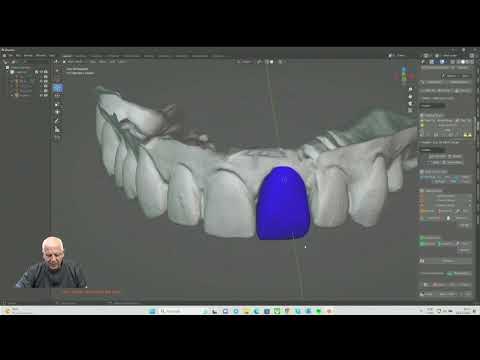
In a digital workflow, scanning and prosthetic design help relate implant position, restorative space, and cervical contour. When an emergence profile has already been developed, careful recording is also needed to transfer that information to the laboratory.
Digital planning improves case visualization and communication, but component adaptation and the gingival response still require clinical evaluation.
In Clinical Practice
In the approach used by Dr. Welson Pimentel, whose background includes more than 30 years of practice and training in prosthodontics, implant dentistry, and periodontics, healing abutment selection should be tied to the planned restorative outcome. The question is not simply, “Which component fits?” but “Which component best prepares this site for the next step?”
An illustrative example is to compare two implants with the same connection: one in a posterior site with thick mucosa and another in an anterior site with a delicate gingival margin. Even when both are mechanically compatible, the height, diameter, and need for customization may differ.
This integration of tissues, components, and the restoration also guides digital planning. A properly selected component does not eliminate every challenge, but it prevents early decisions from unnecessarily complicating rehabilitation.
Healing Abutment Care: Patient Instructions
Oral hygiene should follow the dental team's instructions, taking into account the healing stage and procedures performed. Patients should not turn, tighten, or attempt to remove the component at home.
Contact the dentist if the component becomes loose or falls out, or if there is increasing pain, drainage, progressive swelling, or a sensation of heavy contact when biting. If it comes out, save the component and contact the dental team; do not try to put it back, because the gingiva may change the access opening and the connection needs to be assessed.
How long the healing abutment remains in place depends on the tissues and the restorative sequence. The appearance of healed gingiva alone does not confirm that the implant is ready for loading.
Have questions about your treatment? Book an assessment at Dr. Welson Pimentel’s dental practice in Botafogo, Rio de Janeiro, to discuss your needs and care options. Visit the dental practice
Conclusion
Selecting an implant healing abutment requires consideration of compatibility, transmucosal height, diameter, contour, and available space. The appropriate component maintains clinical access and guides the tissues without excessive compression or functional interference.
Planning this stage alongside the future restoration makes component selection more consistent and reduces improvisation. To integrate component selection and a digital workflow into your case, explore Planejamento Express or speak with Dr. Welson Pimentel.
Frequently asked questions
What does an implant healing abutment do?
It maintains an opening through the gingiva and guides tissue healing around the implant. It is a temporary component and does not replace the crown or definitive prosthetic abutment.
How do you choose healing abutment height?
The dentist assesses the distance between the implant platform and the gingival margin, the component's geometry, and the available space. The component should remain accessible without excessive compression or occlusal interference.
How long does a healing abutment stay on the implant?
The duration depends on tissue healing, the procedures performed, and the restorative sequence. There is no single timeline, and the treating clinician should determine when it is removed.
Is it normal for a healing abutment to be visible?
Yes. Its upper portion usually remains visible to maintain access to the implant. However, heavy contact when biting, increasing pain, or obvious gingival compression should be evaluated.
What should I do if my healing abutment becomes loose or falls out?
Do not try to tighten or reinsert it. If it has fallen out, save it and promptly contact your dentist to have the connection and surrounding tissues evaluated.
Can any healing abutment be used with any implant?
No. Compatibility depends on the system, connection, and prosthetic platform. A similar appearance or the same connection designation does not guarantee that components are interchangeable.
Dental care in Botafogo · Rio de Janeiro
Your smile deserves personalized care
Talk to Dr. Welson Pimentel about implants, prosthetics and oral health. An assessment is the first step toward understanding the right care for you.
- ✓ Dental implants
- ✓ Dental prosthetics
- ✓ Oral health