Dentistry in Niterói: How to Choose a Dental Implant Specialist
Choosing a dental implant specialist in Niterói means evaluating credentials, treatment planning, and follow-up care—not just price or technology. Learn what to look for and what to ask at your first consultation.

To choose a dental implant specialist in Niterói, verify the dentist’s professional registration, specialty registration with the Regional Council of Dentistry, and the quality of the proposed treatment plan. A thorough approach considers your overall health, gums, bone, bite, and planned restoration, explains alternatives and risks, and includes follow-up after your replacement teeth are placed.
A nearby office makes treatment more convenient, but location should not be the only criterion. Implants involve surgical, restorative, and maintenance decisions that must work together. Understanding these stages helps patients compare proposals and allows dentists to explain their work transparently, without relying on promises or equipment as their main selling point.
Dental Implant Specialists in Niterói: What Credentials to Check
The first step is to confirm that the dentist holds an active registration with the Regional Council of Dentistry of Rio de Janeiro, or CRO-RJ. When a dentist presents themselves as an implant dentistry specialist, you should also check that specialty registration through the council’s official channels.
This verification matters because continuing education courses, advanced training, and equipment training do not, on their own, equal a registered specialist qualification. At the same time, no credential alone guarantees a treatment outcome: education must be paired with careful evaluation, appropriate treatment recommendations, and follow-up care.
How to Evaluate Experience With Dental Implants
Beyond credentials, find out whether the dentist regularly handles situations similar to yours. Replacing one tooth involves different needs than full-mouth rehabilitation or a case with significant bone loss.
Useful questions include:
- Does the dentist regularly treat cases with characteristics similar to mine?
- Who will be responsible for the surgery and the restoration?
- Will other specialists participate when needed?
- How are complications and follow-up visits handled?
Relevant experience should not be measured only by years in practice or the number of procedures performed. It also shows in the ability to recognize limitations, discuss alternatives, and refer patients when appropriate.
Read also: How to Move Beyond Dental Implant Price Wars by Communicating the Value of Guided Surgery · Implant Dentistry Conferences: How to Get the Most Out of Them · Bilingual Dentists: English and French in Dental Care
What to Expect at Your First Dental Implant Consultation in Niterói
An implant consultation should not begin and end with choosing a product. Before deciding on a technique, components, or timeline, the dentist needs to understand why teeth were lost, the condition of the mouth, and the patient’s expectations.
The evaluation typically includes a medical and dental history, clinical examination, and assessment of oral hygiene, periodontal health, and the bite. Current medications, smoking, diabetes management, previous treatments, and clenching or grinding habits are all relevant information.
Diagnostic Tests Should Answer Clinical Questions
X-rays, photographs, intraoral scanning, and cone-beam computed tomography (CBCT) may be part of treatment planning, depending on the case. CBCT provides a three-dimensional view of bone and anatomical structures important to surgery, but it must be interpreted alongside the clinical examination.
Laboratory tests and consultation with the patient’s physician may be necessary in certain situations. No universal checklist of tests can replace an individualized evaluation.
Patients should be able to understand what each test is intended to clarify. It is also important to report all medications you take and not stop any medication on your own before a procedure.
Dental Implant Planning: The Final Restoration Guides Surgery
One of the most important criteria when choosing an implant dentist is whether planning starts with the desired restorative outcome. The implant is the structure placed in the bone; the visible tooth will be a crown or part of a prosthesis connected to it through specific components.
That means simply finding an area with available bone is not enough. Implant positioning must account for esthetics, function, access for cleaning, restorative space, and the distribution of chewing forces.
This approach is known as prosthetically driven implant planning: the proposed restoration is defined first, and the conditions needed to position the implants are then evaluated.
What a Treatment Plan Should Explain
A clearly communicated proposal should address:
- Diagnosis: Which problems have been identified and need treatment.
- Alternatives: Which options are viable, including non-implant solutions when appropriate.
- Stages: What will happen before, during, and after surgery.
- Restoration: Which temporary and definitive restorations are being considered.
- Limitations: Which factors could change the timeline or treatment approach.
- Maintenance: How follow-up care will be managed after rehabilitation.
Not every decision can necessarily be finalized at the first consultation. What matters is that uncertainties are identified and the patient understands which evaluations are still needed.
Guided Surgery and Digital Dentistry: Evaluating Their Use
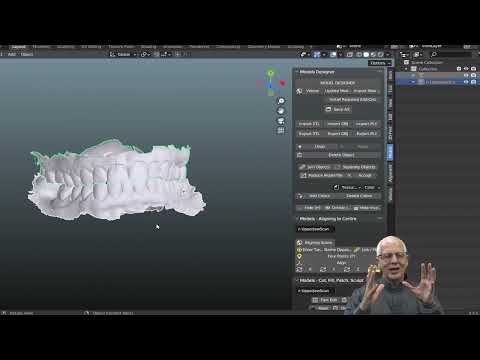
When looking for a dental implant specialist in Niterói, you will often see references to guided surgery, scanning, and digital planning. These tools can improve case visualization and communication among the surgical team, restorative team, and laboratory, but they do not replace sound diagnosis and careful clinical execution.
In static guided implant surgery, imaging and virtual planning data are used to produce a guide that directs steps of the procedure. Whether this approach is appropriate depends on factors such as guide support and stability, mouth opening, anatomy, and surgical access.
Technology Does Not Eliminate Risk
Workflow accuracy depends on image quality, file integration, guide design, fabrication, and fit, as well as surgical technique. Errors at any stage can compromise the outcome.
It is also incorrect to assume that every guided procedure avoids incisions, sutures, or grafts. The approach must be selected for the individual case, and the strategy may need to change during the procedure.
A productive question is: “What benefit does this technology offer in my situation?” The answer should connect the technology to a specific need, rather than simply presenting it as a sign of superior care.
How to Compare Dental Implant Proposals in Niterói
Proposals with different prices do not always describe the same treatment. One may include surgery only, while another covers components, temporary restorations, the definitive prosthesis, and certain follow-up visits.
Before comparing costs, ask for a written plan and clarify its scope. This reduces uncertainty and supports a more transparent professional relationship.
| Criterion | What to Clarify | Why It Matters |
|---|---|---|
| Diagnosis | Which conditions need treatment before implant placement | May change the treatment sequence |
| Surgery | Which procedures are planned | Prevents confusion between implant placement and complete treatment |
| Grafts | Whether grafting is indicated and how that will be confirmed | May add stages and healing time |
| Temporary restoration | Whether one will be used and what its limitations will be | Helps you plan daily activities during treatment |
| Definitive prosthesis | Type, components, and access for cleaning | Affects function, esthetics, and maintenance |
| Follow-up | Included visits and maintenance policy | Clarifies responsibilities after delivery |
Price is a legitimate factor in the decision. However, it should be considered alongside the rationale for treatment, what is included, and the follow-up arrangements, without assuming that the most expensive option is necessarily the best.
Warning Signs When Choosing an Implant Dentist
A dentist’s communication says a great deal about the quality of shared decision-making. There should be room for questions, an explanation of risks, and time to consider the proposal, especially for extensive or irreversible treatment.
Pay attention to:
- Promises of guaranteed results or implants that will never develop problems.
- Recommendations for extractions without explaining whether the teeth could be preserved.
- Fixed timelines offered before a clinical evaluation and necessary testing.
- Claims that the same technique works for every patient.
- Lack of clarity about who will perform the surgery and provide the restoration.
- Pressure to decide immediately because of a promotional offer.
Immediate Fixed Teeth Are Not an Option for Everyone
Immediate loading may be considered in selected cases, depending on implant stability, bone conditions, prosthetic planning, and other clinical factors. It should not be promised indiscriminately.
Likewise, teeth that can be maintained should not be removed simply to make a proposed treatment easier. If you have doubts about extensive extractions, seeking a second opinion is reasonable.
Local Follow-Up: Why a Niterói Location Matters
Implant treatment does not end when the prosthesis is delivered. It includes postoperative visits, adjustments, oral hygiene assessments, and periodic checkups. Office logistics therefore deserve consideration, especially for patients who need someone to accompany them or have limited mobility.
In Niterói, consider travel from your neighborhood, office accessibility, and how appointment times fit your schedule. More important than choosing solely by proximity is being able to attend all necessary stages of treatment.
Ask how to contact the office if a problem develops, who provides guidance between scheduled visits, and how maintenance appointments are organized. A defined communication channel does not replace an in-person evaluation when needed, but it helps prevent uncertainty and delays in assessment.
In Clinical Practice
Dr. Welson Pimentel’s approach centers on integrating surgery, prosthetic care, and periodontal health from the start. With more than 30 years in practice, a doctorate in Clinical Dentistry from UFF, a master’s degree in Prosthodontics, and specialty qualifications in Implant Dentistry and Periodontics, his perspective brings together disciplines that must work in coordination during implant rehabilitation.
This integration can be expressed through a simple question: Will the proposed treatment allow the implants to be properly placed, restored, cleaned, and monitored? A technically feasible solution may not be the most appropriate one if it makes hygiene difficult or overlooks tissue health.
Have questions about your treatment? Book an assessment at Dr. Welson Pimentel’s dental practice in Botafogo, Rio de Janeiro, to discuss your needs and care options. Visit the dental practice
For patients, the practical takeaway is to seek explanations about the complete case, not just implant placement.
Step-by-Step Guide to Choosing Your Implant Dentist in Niterói
An organized selection process can follow this checklist:
- Verify registration: Check professional standing and the advertised specialty with CRO-RJ.
- Evaluate qualifications: Consider experience appropriate to the complexity of your case.
- Assess the consultation: Note whether it includes an examination, attentive listening, and discussion of your health history.
- Request the treatment plan: Understand the surgery, restoration, alternatives, and possible additional stages.
- Compare equivalent proposals: Check what is included rather than looking only at the final price.
- Check maintenance arrangements: Clarify follow-up visits, hygiene requirements, and contact channels for complications.
- Decide without pressure: Seek another opinion if important questions remain unanswered.
Online reviews can offer insight into patient service and office organization, but they do not independently establish clinical quality. Before-and-after photos also cannot predict what will be possible for another person.
Have questions about your treatment? Book an assessment at Dr. Welson Pimentel’s dental practice in Botafogo, Rio de Janeiro, to discuss your needs and care options. Visit the dental practice
Conclusion
Choosing a dental implant specialist in Niterói requires a combination of verifiable qualifications, individualized diagnosis, prosthetically driven planning, and accessible follow-up care. Technology can help, but the deciding factor is how it fits into a clearly explained treatment plan without universal promises.
Have questions about your treatment? Book an assessment at Dr. Welson Pimentel’s dental practice in Botafogo, Rio de Janeiro, to discuss your needs and care options. Visit the dental practice
Frequently asked questions
How can I verify that an implant dentist in Niterói is a specialist?
Use CRO-RJ’s official channels to verify the dentist’s professional registration and specialty registration in Implant Dentistry. Continuing education and training courses do not, on their own, equal a registered specialty qualification.
What should I bring to my first dental implant consultation?
Bring previous dental imaging and records, if available, a medication list, and information about medical conditions, allergies, and medical treatments. The dentist will determine whether additional tests or imaging are needed.
Is guided implant surgery appropriate for every patient?
No. Suitability depends on anatomy, mouth opening, guide support, and surgical and prosthetic planning. It does not eliminate risks or necessarily avoid incisions, sutures, or grafts.
Can implants and fixed teeth be placed on the same day?
Immediate loading may be considered in selected cases. The decision depends on clinical conditions, implant stability, and prosthetic planning, and may need to be reconsidered during surgery.
How should I compare dental implant costs in Niterói?
Compare written plans with equivalent scopes. Check whether they include surgery, components, temporary restorations, the definitive prosthesis, any grafts, and follow-up visits, and clarify the maintenance arrangements.
Do dental implants need maintenance?
Yes. Implants and prostheses require daily cleaning and individualized checkups. Follow-up care allows the dentist to evaluate the tissues around the implants, the bite, and potential problems with prosthetic components.
Dental care in Botafogo · Rio de Janeiro
Your smile deserves personalized care
Talk to Dr. Welson Pimentel about implants, prosthetics and oral health. An assessment is the first step toward understanding the right care for you.
- ✓ Dental implants
- ✓ Dental prosthetics
- ✓ Oral health