Implant Dentistry Conferences: How to Get the Most Out of Them
Getting the most out of an implant dentistry conference takes clear goals, critical thinking, and a post-event plan. Learn how to turn lectures, connections, and demonstrations into knowledge you can apply in practice.

To get the most out of an implant dentistry conference, identify your clinical questions before the event, choose activities that help answer them, and set aside time to evaluate technology and talk with colleagues. The most important return is not the number of lectures you attend, but your ability to turn what you learn into better-informed decisions, organized workflows, and appropriate treatment recommendations.
For anyone searching for a “dental implant conference,” the options may look similar: lectures, an exhibit hall, courses, and case presentations. However, each event’s value depends on your career stage, the quality of its program, and what you do with the knowledge after you return.
How to choose an implant dentistry conference
Before considering the size of the exhibit hall or the speaker lineup, identify what you need to develop. A clinician new to implant dentistry has different needs from someone who already provides complex rehabilitation or manages a digital workflow.
A conference can help you refresh foundational knowledge, explore a technique, meet potential partners, or understand market changes. You can combine these goals, but choosing a priority keeps your schedule focused.
A scientific program aligned with your clinical questions
Look for a program that covers diagnosis, planning, surgery, prosthetic treatment, and maintenance. Implant dentistry involves more than implant placement: the planned position must account for the restoration, peri-implant tissues, hygiene, and the patient’s circumstances.
Check for discussions of complications, limitations, and follow-up. A series of visually impressive results can be inspiring, but it teaches less when patient selection, alternatives, and challenges are left unexplained.
Also review the speakers’ experience with their topics, the clarity of the learning objectives, and disclosures of any commercial relationships.
Conference, hands-on course, or ongoing education?
Not every educational need is best addressed at a conference. Match the format to your goal:
| Format | Primary value | Important limitation |
|---|---|---|
| Conference | Broaden knowledge and compare approaches | Usually offers limited individual guidance |
| Focused symposium | Explore a specific area in depth | May cover a narrower range of topics |
| Hands-on course | Practice specific steps with guidance | Exercises do not replace supervised clinical experience |
| Ongoing education program | Build competencies progressively | Requires a regular commitment of time and resources |
| Exhibit hall | Explore products and talk with suppliers | A commercial demonstration is not clinical validation |
A conference is often an excellent place to discover what to study next. Attendance should not be viewed as automatically qualifying you to perform a new technique.
Read also: How to Move Beyond Dental Implant Price Wars by Communicating the Value of Guided Surgery · Bilingual Dentists: English and French in Dental Care · Planejamento Express: guided implant surgery for dentists across Brazil
Planning before the conference: goals, schedule, and budget
Preparation starts with real challenges in your practice. Reviewing workflows and recurring questions helps you choose activities more precisely than simply following trending topics.
You may be struggling with digital records, prosthetic component selection, laboratory communication, or maintenance of implant-supported restorations. Each challenge calls for a different schedule.
Turn uncertainties into specific questions
Replace broad goals, such as “learn guided surgery,” with questions that can produce actionable answers:
- What conditions compromise the stability of a surgical guide?
- How can you verify compatibility between a digital library and a physical component?
- When does scanning require additional precautions in partially or completely edentulous patients?
- What information does the laboratory need to plan a provisional restoration?
- What findings indicate a need for referral or additional training?
Keep these questions in a note on your phone or in a notebook. They help you select sessions, guide conversations, and recognize when a presentation has not addressed what you needed to know.
Calculate the full investment in the event
Registration is only part of the cost. Include transportation, lodging, meals, local travel, additional courses, and the impact of time away from your practice.
Arrange coverage for patient care and provide instructions for patients receiving ongoing treatment. If you have a team, designate who will handle administrative questions and direct any clinical concerns to an available clinician.
Keep your education budget separate from your purchasing budget. This distinction reduces the temptation to justify an impulse purchase simply because a special offer is available during the event.
Build a schedule with room for conversation
Divide the program into essential, supplementary, and optional activities. Include breaks for moving between sessions, meals, and note-taking.
Trying to fill every time slot often undermines attention. A well-prepared technical conversation may clarify more than attending portions of several lectures in different rooms.
How to evaluate lectures at implant dentistry conferences
A convincing presentation does not necessarily provide sufficient support for incorporating a particular approach into routine practice. Critical appraisal helps distinguish plausibility, clinical experience, and stronger evidence.
Distinguish a case report from a general recommendation
Case reports are useful for illustrating possibilities and clinical reasoning. However, they do not establish on their own that an approach will perform equally well in other patients or in other clinicians’ hands.
During a lecture, look for:
- How patients were selected.
- Which local and systemic conditions influenced treatment selection.
- What alternatives were available.
- Which complications occurred and how they were managed.
- What follow-up was presented.
- Which limitations the speaker acknowledges.
Immediate postoperative photographs alone do not answer questions about maintenance, tissue stability, or the long-term performance of the restoration.
Ask questions that reveal a technique’s limitations
Useful questions go beyond “What material did you use?” Try to understand when the presenter would not recommend that approach and which findings would prompt a change in the treatment plan.
It is also worth asking which steps are most susceptible to error and what resources are needed to manage complications. These conversations bring the content closer to real-world clinical practice.
When sponsorship or a commercial relationship is involved, consider that context without automatically dismissing the information. The key is to distinguish the data presented, the speaker’s interpretation, and the promotional message.
Digital dentistry at conferences: what to look for in demonstrations
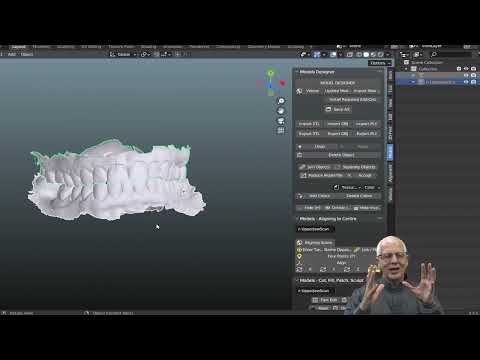
Scanners, software, printers, and guided surgery solutions draw attention because they make complex processes easier to visualize. Evaluation, however, should start with the clinical workflow you want to improve—not with an isolated piece of equipment.
A demonstration using prepared files may not reflect the challenges of data acquisition, integration, and verification encountered in practice.
Evaluate the complete digital workflow
Ask the exhibitor to explain the process from data collection to clinical delivery. For implant planning, this may involve a clinical examination, records, CBCT imaging when indicated, scanning, prosthetic planning, and data validation.
For guided surgery, investigate how file alignment, guide support, surgical access, and compatibility among the guide, sleeves, instruments, and implant system are verified. Accuracy does not depend on software alone.
Also ask how the workflow handles incomplete data, limited mouth opening, imaging artifacts, and the need for design revisions.
Check compatibility, support, and recurring costs
Before considering a purchase, evaluate:
- File import and export formats.
- Available libraries and correct component identification.
- Restrictions on integration with laboratories and other partners.
- Initial training and technical support.
- Licenses, updates, maintenance, and consumables.
- Infrastructure and quality control requirements.
- Patient data storage and protection measures.
The presence of a library in a software program does not eliminate the need to verify the corresponding physical component. Likewise, an apparent fit between parts does not establish compatibility or suitability for use.
Networking at implant dentistry events without an overly sales-focused approach
Building professional relationships does not mean exchanging contact information indiscriminately. Connections tend to be more useful when they begin with a specific question, a shared interest, or complementary skills.
Prepare a brief introduction: your area of practice, the types of cases you usually treat, and the topic you want to explore. Then listen. Specific questions help start productive conversations with educators, colleagues, and dental technicians.
Look for partners beyond your practice
Laboratories, imaging centers, digital planning teams, and clinicians in other specialties directly contribute to treatment quality. Use the event to understand how they work and what information they need.
When exploring a potential partnership, discuss responsibilities, turnaround times, approval criteria, revisions, and communication channels. An attractive portfolio does not replace a clear process.
Maintain confidentiality when discussing cases. Avoid showing patient names, charts, or identifiable images in informal conversations, and follow the ethical and legal requirements that apply to data sharing.
Follow up meaningfully after meeting
Record the context of each contact and any topics you agreed to revisit. After the event, send a brief message referring to your conversation, without automatically adding the person to marketing lists.
A thoughtful professional exchange is usually more valuable than collecting contacts without follow-through.
In clinical practice: turning innovations into responsible decisions
From Dr. Welson Pimentel’s perspective, shaped by more than 30 years in clinical practice and teaching implant dentistry and digital tools, the value of an innovation begins with one question: What problem does it solve in this case?
This reasoning is especially important when integrating surgery and prosthetic treatment. A tool that simplifies one step cannot be evaluated without considering implant position, restorative space, hygiene access, and future maintenance.
Treatment planning should guide technology selection
For a case discussed after a conference, the first step does not have to be purchasing the equipment demonstrated. It may be improving the records protocol, reviewing communication with the laboratory, or organizing component verification.
In guided surgery, for example, the guide is part of a process. Clinical examination, record quality, prosthetically driven planning, and verification of guide seating remain essential. The clinician must also be prepared to recognize limitations and adjust the approach when necessary.
For patients interested in these advances, this highlights an important distinction: technology can support treatment, but it does not replace diagnosis, individualized treatment selection, or follow-up.
Do not confuse staying current with immediate implementation
Another clinician’s experience should be studied in context. Before using a new technique, assess the education required, the available infrastructure, and your ability to manage complications.
Continuing education may also lead you to decide against introducing a procedure at that time. Recognizing limitations and referring when appropriate are part of responsible practice.
After the implant dentistry conference: a step-by-step implementation plan
Learning loses momentum when it remains scattered across slide photos, catalogs, and messages. Organize your materials while the discussions are still fresh.
- Summarize: record the main ideas in your own words and identify unanswered questions.
- Categorize your findings: separate straightforward process improvements, topics for further study, and proposals that require training or investment.
- Verify the information: consult references, instructions for use, and technical documentation before changing protocols.
- Discuss with your team: assess the effects on front-desk operations, clinical care, laboratory work, maintenance, and patient communication.
- Choose one priority: favor a clearly defined improvement over multiple simultaneous changes without follow-up.
- Define evaluation criteria: establish what will be monitored, who will be responsible, and when the process will be reviewed.
Changes involving clinical procedures require appropriate training and individualized treatment selection. Patients should not become a testing ground for an innovation seen at an event.
How to measure the return on conference attendance
The return does not have to be measured solely in revenue. Consider reduced rework, more complete records, clearer communication, and better organization of clinical steps.
Also record what the event helped you avoid: an incompatible purchase, an unsuitable workflow, or a premature treatment recommendation. Better decision-making includes knowing when not to invest.
When communicating with patients, present your professional development in a measured way. Conference attendance demonstrates an interest in continuing education, but it does not establish clinical superiority or guarantee outcomes.
Have questions about your treatment? Book an assessment at Dr. Welson Pimentel’s dental practice in Botafogo, Rio de Janeiro, to discuss your needs and care options. Visit the dental practice
Conclusion
Getting the most out of an implant dentistry conference is a process that starts before registration and continues after the final lecture. Clear goals, critical appraisal, meaningful conversations, and organized implementation make the event more valuable for your career and patient care.
More important than keeping up with every innovation is selecting what makes sense for your practice while respecting the evidence, training requirements, and patient needs. To discuss applying digital planning to your cases, speak with Dr. Welson Pimentel or explore the support available through Planejamento Express.
Frequently asked questions
How do I choose a good implant dentistry conference?
Evaluate how well the program addresses your clinical questions, the speakers’ experience, discussions of limitations and complications, and transparency about commercial relationships. Also consider the total cost and the format of the activities.
Is an implant dentistry conference worthwhile for beginners?
It can help you explore approaches, prioritize further study, and build professional relationships. For beginners, sessions on diagnosis, fundamentals, prosthetic planning, and maintenance are often more useful than focusing only on complex techniques.
Does attending a conference qualify me to perform a new technique?
Attendance alone does not establish competence to perform a procedure. You need to assess your education, supervised training, professional requirements, clinical infrastructure, and ability to manage complications.
Is it worth buying equipment at a conference exhibit hall?
A purchase should address a previously identified need. Compare compatibility, total cost, support, training, and contract terms; a limited-time offer should not be the only deciding factor.
How can I get more out of digital dentistry lectures?
Examine the complete workflow, from data acquisition to clinical verification. Ask about file integration, libraries, component compatibility, limitations, support, and recurring costs.
What should I do after an implant dentistry conference?
Organize your notes, check references and technical documentation, follow up with relevant contacts, and choose one priority improvement. Clinical changes should reflect the training required and each patient’s individual treatment needs.
Dental care in Botafogo · Rio de Janeiro
Your smile deserves personalized care
Talk to Dr. Welson Pimentel about implants, prosthetics and oral health. An assessment is the first step toward understanding the right care for you.
- ✓ Dental implants
- ✓ Dental prosthetics
- ✓ Oral health