How to Explain Guided Implant Surgery to Patients
Explaining guided implant surgery means translating digital planning into information patients can use to make decisions. Learn how to present the steps, benefits, and limitations without creating unrealistic expectations.

Explaining guided implant surgery to patients means showing them that implant placement can be planned digitally and guided during surgery by a device made specifically for their case. The central message is simple: this technology helps transfer the plan to the mouth, but it does not replace the surgeon’s experience or eliminate treatment risks.
For dentists, a good explanation does not need to start with software, a 3D printer, or instruments. It needs to answer the questions of the person in the chair: what will be done, why this approach was recommended, what alternatives are available, and what to expect during recovery.
How to explain guided implant surgery in plain language
An initial explanation can follow this model:
“Before surgery, we’ll review your scans and plan the implant positions on a computer, considering the available bone and the teeth we intend to replace. When appropriate, we use a custom guide to direct the instruments during placement. This helps us carry out the plan, but we may need to make adjustments based on the actual conditions in your mouth.”
This explanation brings together three important ideas: advance planning, guidance during the procedure, and clinical responsibility. It also prevents a common misconception: that the computer performs the surgery on its own.
The surgical guide can be described as a device that fits over the teeth, gum tissue, or bone, depending on its design. Its openings guide the instruments according to the system being used. In some protocols, they also guide implant insertion.
A useful analogy: the guide as a route reference
Comparing the treatment plan to a map can make it easier to understand:
“It’s like studying a route before taking a trip. The guide helps us follow the planned path, but the clinician continues to assess conditions along the way.”
This analogy has a limit: biological tissues are not completely predictable. Avoid statements such as “it’s impossible to deviate from the position” or “there’s zero margin of error.” They turn a guidance tool into a promise the technique cannot support.
Read also: How to Move Beyond Dental Implant Price Wars by Communicating the Value of Guided Surgery · Implant Dentistry Conferences: How to Get the Most Out of Them · Bilingual Dentists: English and French in Dental Care
Before discussing guided implants, identify the patient’s main concern
Different patients need different explanations. Some want to understand the technology; others are concerned about pain, cost, time without teeth, or previous experiences.
Start with an open-ended question:
- “What concerns you most about this surgery?”
- “Have you heard of guided implant surgery? What is your understanding of it?”
- “Is your main question about the surgery, recovery, or the teeth we’ll be replacing?”
The answer determines the order of the conversation. If pain is the concern, a lengthy presentation about digital files probably will not help at that moment.
Acknowledge the concern without minimizing it: “I understand your concern. Let’s talk about anesthesia, aftercare, and what you may experience afterward.” Then explain where guided surgery fits into that context, without attributing benefits to it that depend on other stages of treatment.
How to present digital planning and the surgical guide
The digital workflow is easier to understand when divided into steps. For patients, the software’s name matters less than the purpose of each piece of information.
1. Clinical evaluation and treatment goals
Explain that everything begins with diagnosis: the condition of the teeth and gums, overall health, bite, oral hygiene, and expectations. The recommendation for guided surgery follows this evaluation, not the other way around.
The goal is not simply to place an implant in bone. It is to create the conditions for a functional restoration that can be kept clean and is appropriate for the case.
2. Imaging and records of the mouth
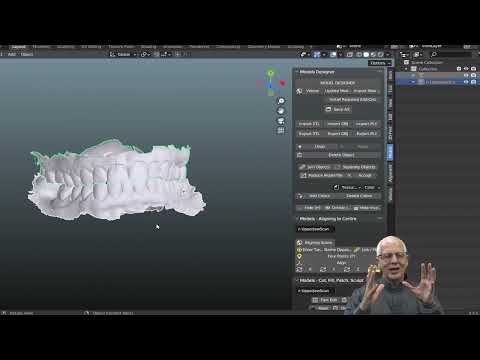
A cone-beam CT (CBCT) scan provides three-dimensional information about bone and anatomical structures. An intraoral scan or a digitized model records the surfaces of the teeth and tissues.
A useful phrase is: “We combine information about the bone and the surfaces of your mouth to study where the implant can go and how the replacement tooth will relate to it.” These records must be high quality and accurately aligned.
3. Planning implant positions
Show that implant positions are evaluated in relation to the planned restoration, bone, and relevant anatomical structures. Planning also helps assess limitations and possible additional procedures.
Do not say that the software “chooses the best position on its own.” Interpretation and decision-making remain clinical responsibilities.
4. Fabricating and checking the guide
Once the design is approved, the guide is fabricated and prepared according to the material and applicable protocol. Its fit and stability must be checked before and during use.
For the patient, a simple explanation is enough: “The guide needs to fit properly and stay stable. If it doesn’t fit as expected, we should not use it without reassessing the situation.”
5. Surgery and follow-up
The procedure is performed with anesthesia and care tailored to the individual. The surgeon monitors the procedure, checks local conditions, and may modify the approach when needed.
Follow-up care continues afterward. The technology does not eliminate healing time, the need for oral hygiene, or maintenance visits.
Benefits of guided implant surgery: how to communicate without exaggerating
Communication should distinguish what the technique offers from what may occur only in selected cases. Its central benefit is allowing surgery to be guided by a preoperative plan that integrates surgical and restorative considerations.
In suitable cases, this approach may allow less extensive surgical access and a more organized procedure. However, outcomes depend on factors such as imaging quality, planning, guide fit, instruments, and the team’s experience.
| Topic | Appropriate explanation | Statement to avoid |
|---|---|---|
| Implant position | “The guide helps transfer the planned position to your mouth.” | “The implant goes exactly where planned, with no deviation.” |
| Incisions | “Some cases allow surgery without raising a gum flap.” | “Guided surgery never involves incisions.” |
| Recovery | “A less extensive approach may support a smoother recovery.” | “You won’t have any pain or swelling.” |
| Safety | “Planning helps us assess limitations and important anatomical structures.” | “There is no risk.” |
| Treatment time | “The workflow organizes the steps, but the timeline depends on your case.” | “Everything will be finished the same day.” |
Precise language protects the relationship of trust. There is no need to downplay the technology’s value; it needs to be presented with clear indications and limitations.
Limitations and risks that belong in the conversation
Patients do not need to know every technical detail, but they should understand the limitations relevant to their decision.
Guided implant surgery is still a surgical procedure. Pain, swelling, bleeding, infection, healing difficulties, and failure of the implant to integrate with the bone can occur, along with other complications relevant to the case.
The workflow also has specific limitations, such as difficult access, limited mouth opening, guide instability, or discrepancies between the records and the clinical situation. Deviations can occur throughout the different stages, so planning must account for safety margins.
A balanced explanation is:
“Planning ahead helps us anticipate difficulties, but it cannot predict everything. During surgery, I’ll check whether conditions match the plan and adjust the technique if necessary.”
Also explain that changing the approach does not automatically mean an error occurred. It may reflect a safety decision based on a condition identified during treatment.
Guided surgery does not mean immediate fixed teeth
This distinction deserves emphasis because it often shapes patient expectations. Guided surgery is a way to direct implant placement; immediate loading is a restorative treatment strategy.
The possibility of placing a prosthesis shortly after surgery requires a specific assessment, including implant stability, bone conditions, the distribution of supporting implants, and the characteristics of the planned restoration.
Likewise, a guide does not automatically eliminate the need for bone grafting or make every case suitable for flapless surgery.
When an immediate prosthesis may be possible, also present the backup plan: “We’ll evaluate that possibility, but if the necessary conditions aren’t present, we’ll follow a healing and restorative plan that we’ve agreed on in advance.”
How to use images to explain guided implant surgery
One well-chosen image often helps more than several technical screens. Show only what is needed to answer the patient’s question.
An effective sequence is:
- Present the area that needs restoration.
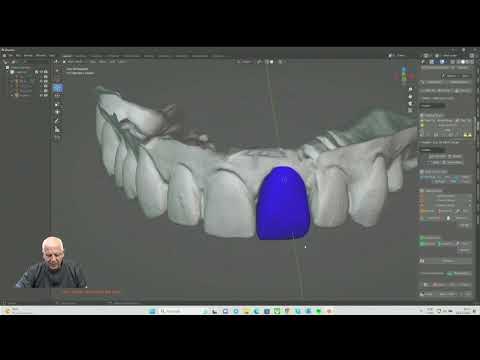
- Show the proposed position of the replacement tooth.
- Relate that position to the implant and available bone.
- Display the guide or a demonstration model, when available.
- Explain how the device will guide part of the procedure.
Avoid scrolling through CT slices without context. For someone unfamiliar with them, these images may increase anxiety rather than provide clarity.
Also distinguish a simulation from an outcome: a digital representation supports planning and communication, but it should not be presented as a guarantee of the final appearance. Esthetics depend on the tissues, prosthesis, healing, and other individual factors.
In clinical practice
In Dr. Welson Pimentel’s clinical approach, integrating implant dentistry, prosthodontics, and digital planning provides a foundation for explaining treatment in terms of the intended restorative outcome, rather than just the technology being used.
The key teaching point is to start with the replacement tooth: where it needs to be, how it should function, and what conditions are needed to maintain it. From there, it becomes easier to understand why implant positioning requires planning.
To apply this approach during a consultation, organize the conversation around three questions:
- What do we want to restore? The area and function to be rehabilitated.
- What conditions are we working with? Bone, tissues, health, and identified limitations.
- How will we carry out treatment? The proposed technique, steps, alternatives, and follow-up.
This framework keeps the presentation from becoming a software demonstration. Digital planning is instead explained as a tool for clinical decision-making and communication among the professionals involved.
Communication, costs, and informed consent
In dental practice management, explaining treatment well also means organizing information. Team members can outline the steps and help with scheduling, but the treating dentist must discuss indications, risks, and alternatives.
When discussing costs, describe what the proposal covers: imaging, planning, the guide, surgery, components, the prosthesis, and follow-up, as specified in the estimate. Make clear what is included and what may involve additional fees. Avoid justifying the cost solely with phrases such as “state-of-the-art technology.”
Present clinically relevant alternatives, including conventional surgery when appropriate. Guided surgery should not be marketed as inherently superior in every situation.
Confirm understanding before wrapping up
Instead of simply asking “Do you understand?”, try:
“To make sure I explained this clearly, how would you describe what the guide does? And what did we agree to do if we can’t place the prosthesis immediately?”
This technique checks the quality of the explanation without turning the conversation into a test. Document the relevant information discussed and obtain informed consent. The document complements the conversation; it does not replace it.
Have questions about your treatment? Book an assessment at Dr. Welson Pimentel’s dental practice in Botafogo, Rio de Janeiro, to discuss your needs and care options. Visit the dental practice
Conclusion
Explaining guided implant surgery to patients requires translating planning, indications, and limitations into accessible language. The guide directs the procedure, but clinical assessment, professional experience, and follow-up remain essential.
A well-led conversation distinguishes guided surgery from immediate loading, presents alternatives, and prepares patients for shared decision-making. The result is more realistic expectations and a relationship built on trust, without relying on technological promises.
To integrate surgery and restorative treatment into digital planning for your cases, explore the support available from Planejamento Express or speak with Dr. Welson Pimentel.
Frequently asked questions
How can I explain guided implant surgery to patients in simple terms?
Explain that implant positions are planned digitally and that a custom guide helps direct the instruments during surgery. Emphasize that the surgeon remains responsible for decisions and may adjust the approach based on clinical conditions.
Is guided implant surgery always performed without incisions?
No. Some cases allow implant placement without raising a gum flap, while others require more extensive surgical access. The choice depends on anatomical conditions and the procedures needed.
Does guided implant surgery guarantee less pain?
No. In selected cases, a less extensive approach may support recovery, but pain and swelling vary depending on the procedure and individual characteristics.
Does guided surgery allow fixed teeth to be placed the same day?
Not necessarily. Immediate loading depends on specific conditions, such as implant stability and the characteristics of the planned restoration. Using a guide does not guarantee that these criteria will be met.
Does a surgical guide eliminate the risks of implant placement?
No. It helps transfer the treatment plan to the mouth, but surgical risks and technical limitations remain. Record quality, guide fit, surgical execution, and follow-up care are still essential.
Dental care in Botafogo · Rio de Janeiro
Your smile deserves personalized care
Talk to Dr. Welson Pimentel about implants, prosthetics and oral health. An assessment is the first step toward understanding the right care for you.
- ✓ Dental implants
- ✓ Dental prosthetics
- ✓ Oral health