Artificial Intelligence in Dentistry: Practical Uses Today
Artificial intelligence can already support image analysis, digital treatment planning, and dental practice management. Learn where it helps, what precautions it requires, and how to get started without losing clinical control.

Artificial intelligence in dentistry can already support image analysis, automate administrative tasks, and assist with steps in digital treatment planning and restoration design. Safe use depends on data quality, the tool’s intended purpose, and review by the dentist: AI provides support but does not replace the clinical examination, diagnosis, or professional responsibility.
For dental practice owners and managers, the most useful question is not whether technology will transform the profession. It is which tasks it can improve today, with measurable benefits and without creating unnecessary risks for patients and staff.
Artificial intelligence in dentistry: What actually counts as AI?
Artificial intelligence is a collection of computational methods that can recognize patterns, make predictions, or generate content from data. In dentistry, it may appear in radiographic analysis software, an assisted design tool, or a communication assistant.
However, digital dentistry and artificial intelligence are not synonymous. An intraoral scanner, a 3D printer, or a CAD/CAM program does not necessarily use AI in every function.
Automation may simply follow predefined rules. A machine learning model, on the other hand, uses patterns learned during its development to produce an output. This distinction matters because it affects the limitations and how each result should be validated.
Analytical AI and generative AI serve different purposes
Analytical tools can locate structures, classify images, or suggest annotations. Generative AI produces text, images, and other content, making it useful for drafts and organizing information.
A general-purpose text assistant should not be treated as a validated system for dental diagnosis. Its ability to present a convincing explanation does not demonstrate that its clinical conclusion is correct.
Read also: How to Move Beyond Dental Implant Price Wars by Communicating the Value of Guided Surgery · Implant Dentistry Conferences: How to Get the Most Out of Them · Bilingual Dentists: English and French in Dental Care
Practical uses of AI in the dental office
The best application depends on the practice. A team handling a high volume of messages faces different challenges than a dental laboratory or an implant-focused practice.
| Application | How AI can help | What requires human review |
|---|---|---|
| Image analysis | Suggest regions of interest and annotations | Findings, clinical context, and image limitations |
| Digital treatment planning | Assist with segmentation and identification of structures | Anatomy, file alignment, and treatment decisions |
| CAD/CAM | Propose initial restoration designs | Margins, contacts, occlusion, and manufacturing feasibility |
| Documentation | Organize notes and generate drafts | Accuracy, authorship, and data protection |
| Administrative patient support | Answer operational questions and organize requests | Escalation of urgent concerns and unexpected situations |
| Practice management | Support analysis of metrics and workflows | Data quality and interpretation of results |
These capabilities are not available at the same level of quality in every product. Each specific feature, its intended purpose, and the conditions under which it was evaluated must be checked.
AI in dental radiograph and CBCT analysis
Some tools can highlight suspicious areas or help identify structures in diagnostic images. Depending on the solution, this may include support for evaluating radiographic caries, bone levels, and anatomical landmarks.
The potential benefit is an additional layer of support during image interpretation. However, a highlighted area on the screen is not a diagnosis, and the absence of a highlight does not rule out an abnormality.
Why do AI errors need to be considered?
A false positive may suggest an abnormality that is not present. A false negative may fail to flag a relevant finding. Interpretation can also be affected by artifacts, positioning, poor acquisition quality, and differences between the data used to develop the system and the images obtained in the practice.
Research on specific applications shows promising results, but performance on selected datasets does not guarantee the same usefulness across every patient population or imaging system. That is why it is important to evaluate evidence for the intended task, rather than relying on the phrase “powered by artificial intelligence.”
Clinical decisions require correlation of imaging with the patient’s history, symptoms, and examination. Imaging should not be ordered simply because a particular software program can process it: the indication must remain clinically justified.
Artificial intelligence in implant planning and guided surgery
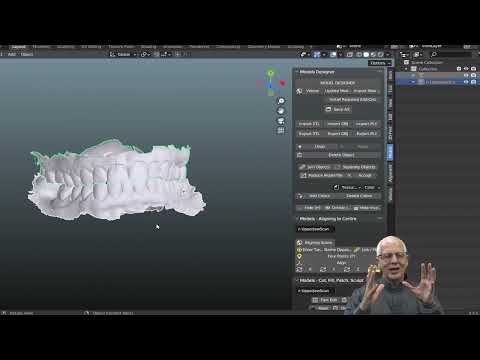
In implant dentistry, AI can help with time-consuming tasks such as segmenting structures in CBCT scans and preparing digital models. This may streamline the workflow, provided that the resulting structures are checked.
Implant planning, however, involves more than finding space in bone. It must integrate the planned restoration position, tissue conditions, surgical access, anatomical limitations, and future maintenance.
What cannot be delegated to an algorithm
Before approving a plan for guided implant surgery, the clinician should verify:
- The quality and compatibility of the imaging and scans.
- The alignment between CBCT data and digital surface scans.
- The identification of relevant anatomical structures.
- The relationship between implant position and the planned restoration.
- Clearance for instruments and components, including available mouth opening.
- Guide support, stability, and the ability to seat the guide properly.
- Compatibility among the guide, sleeves, instruments, and protocol being used.
An initial error can carry through the entire workflow and into the manufactured guide. Faster segmentation therefore does not eliminate the need for validation at subsequent stages.
AI in prosthodontics, CAD/CAM, and digital design
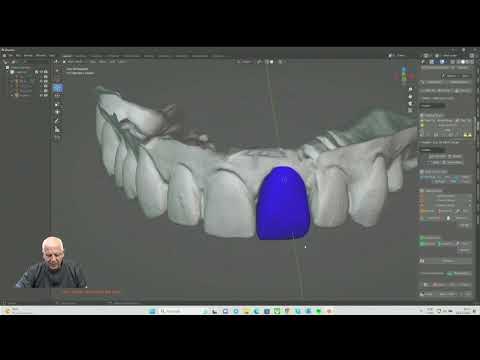
In digital design, AI features can propose initial tooth anatomy or help adapt a restoration to the specific case. When appropriately used, they reduce some repetitive work and allow more attention to clinical refinement.
This does not mean the first proposal is ready for manufacturing. Preparation margins, fit, material thickness, proximal contacts, occlusion, and access for hygiene must all be reviewed.
Libraries and components remain critical
For implant-supported restorations, the appearance of the design does not establish compatibility. The digital library must match the physical component, connection, and manufacturing workflow being used.
An incorrect library can compromise the result even when the restoration looks appropriate on the screen. AI should not be used to assume the identity of an unknown component without documentary and technical verification.
This is an important point in professional education: understanding materials, prosthetic components, and manufacturing limitations remains just as necessary as mastering the software.
AI in dental practice management and patient communication
For many practices, the best starting point is outside diagnosis. Clearly defined administrative tasks offer an opportunity to test the technology with less clinical exposure, although privacy still requires attention.
Potential applications include:
- Drafting responses about office hours and operations.
- Developing communication scripts for the front desk.
- Organizing internal standard operating procedures.
- Preparing initial drafts of patient education materials.
- Supporting the interpretation of scheduling and no-show metrics.
- Improving the clarity of previously approved communications.
AI can simplify the wording of instructions, but it should not invent recommendations, change prescriptions, or turn general information into individualized advice without professional evaluation.
Virtual assistants need to know when to escalate
Automated patient communication should have clear boundaries and provide access to the human team. Reports of severe pain, persistent bleeding, trauma, or breathing difficulty must not get stuck in a sales workflow or receive automatically reassuring responses.
The protocol must direct patients to appropriate care, including emergency care when needed. It is also advisable to make it clear to patients when an interaction is automated.
Data protection and responsibility when using dental AI
Health information is classified as sensitive personal data under Brazil’s General Data Protection Law, known as the LGPD. This includes patient records, images, and other information that can identify a patient directly or indirectly.
Copying a case into a public AI tool may expose data to uses, retention practices, or sharing arrangements that the practice has not evaluated. Removing only the patient’s name is not always enough: images, metadata, and details in the case narrative may allow reidentification.
What to check before purchasing a tool
The evaluation should include specific questions:
- What data will be sent, and for what purpose?
- Where will it be stored, and who will have access?
- Does the vendor use the data to train models?
- What security controls and deletion options are available?
- How are incidents and requests from individuals regarding their data handled?
- Is documentation available on limitations and performance?
- Does the intended use require regulatory authorization, and if so, is the product appropriately authorized?
The applicable legal basis and transparency obligations must be evaluated; blanket consent does not satisfy every obligation. Depending on the workflow, seeking legal and information security support is prudent.
For clinical documentation, AI-generated drafts must be checked before they become part of the patient record. Information that was not observed, examinations that were not performed, and treatment decisions that were not discussed must not be entered as facts.
How to implement artificial intelligence in dentistry: Step by step
1. Choose a specific problem
Start with a clearly defined task, such as standardizing administrative responses. Avoid purchasing a broad solution without knowing which process needs improvement.
2. Document the baseline
Track time spent, recurring errors, and the amount of rework. These records allow you to compare results without relying solely on the impression of greater productivity.
3. Evaluate intended use, evidence, and security
Request a demonstration using representative examples. Review documentation, technical requirements, integration with existing systems, and data handling practices.
4. Run a supervised pilot
Use the tool in a controlled process with established review criteria. For initial testing, prefer synthetic or appropriately deidentified data when compatible with the task.
5. Assign responsibility and set limits
Establish who reviews outputs, which decisions cannot be automated, and how failures will be documented. Train the team to question responses that sound plausible but are inconsistent.
6. Measure results before expanding
Consider total time, rework, quality, and operating costs. A solution that produces results quickly but requires extensive corrections may not deliver a real improvement. Reassess performance after major updates as well.
In clinical practice
From Dr. Welson Pimentel’s perspective, shaped by more than 30 years in practice and work in implant dentistry, prosthodontics, and digital treatment planning, technology should be evaluated by what it contributes to the case—not by how impressive its presentation looks.
Experience teaching digital tools and working with Planejamento Express workflows reinforces one principle: a technically processed file is not, by itself, a clinically validated treatment plan.
In daily practice, this means reviewing the source data, understanding each step, and maintaining communication among the dentist, planning team, and laboratory. If a scan is incomplete or the prosthetic plan has not been defined, adding AI does not automatically resolve those limitations.
For those building their careers, it is worth developing three competencies in parallel: a strong clinical foundation, proficiency in digital workflows, and the critical judgment to evaluate results. Knowing when to reject an automated suggestion is just as important as knowing how to use it.
Have questions about your treatment? Book an assessment at Dr. Welson Pimentel’s dental practice in Botafogo, Rio de Janeiro, to discuss your needs and care options. Visit the dental practice
Conclusion
Artificial intelligence in dentistry already has useful applications in imaging, treatment planning, prosthodontics, communication, and practice management. The safest approach is to adopt tools for specific tasks, verify their suitability, and maintain human review proportional to the risk.
The professional’s defining contribution remains turning information into responsible decisions. AI can support that work, but it does not replace clinical knowledge, listening to patients, or quality control.
To integrate digital tools into implant and restorative treatment planning, consider speaking with Dr. Welson Pimentel or learning more about Planejamento Express, always starting with the actual needs of each case.
Frequently asked questions
How is artificial intelligence used in dentistry today?
It can support image analysis, anatomical segmentation, restoration design, documentation, and administrative tasks. Features vary by tool and require oversight appropriate to their intended use.
Can artificial intelligence replace a dentist’s diagnosis?
No. It may suggest findings, but diagnosis depends on the patient’s history, clinical examination, and the clinician’s interpretation of diagnostic tests.
Does all digital dentistry software use artificial intelligence?
No. CAD/CAM, scanning, and 3D printing may use conventional automation. It is necessary to check which features actually use AI and how their results should be validated.
Can I enter patient data into a public AI tool?
You should not do so without evaluating the legal basis, the need to share the information, the vendor’s terms, and the security of data processing. Removing only the name may not prevent patient identification.
Where should a dental practice start with AI?
Choose a clearly defined administrative task, run a supervised pilot, and compare time, errors, and rework. Before using real patient data, verify privacy, security, and responsibilities.
Does AI guarantee a safe plan for guided implant surgery?
No. It can assist with certain steps, but the clinician must check anatomy, file alignment, the planned restoration position, guide seating, and compatibility with the instruments.
Dental care in Botafogo · Rio de Janeiro
Your smile deserves personalized care
Talk to Dr. Welson Pimentel about implants, prosthetics and oral health. An assessment is the first step toward understanding the right care for you.
- ✓ Dental implants
- ✓ Dental prosthetics
- ✓ Oral health