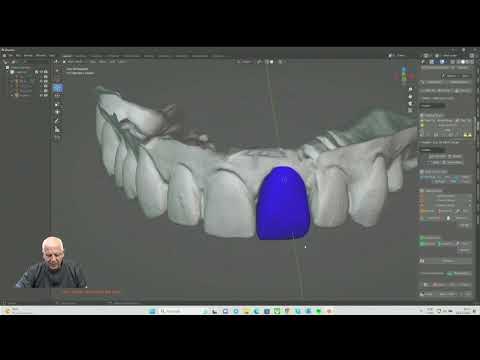
How Dentists Can Grow Their Careers with Digital Dentistry
Growing your career with digital dentistry takes more than buying equipment: it requires developing clinical skills, organizing workflows, and building strong partnerships. Learn how to turn technology into real career opportunities.

Digital dentistry can help dentists advance their careers by strengthening their diagnostic, treatment planning, communication, and clinical workflow capabilities. This growth depends less on owning equipment and more on understanding clinical indications, working with qualified partners, and turning digital tools into consistent processes for patients and the practice.
For dentists getting started, the most useful question is not “Which scanner should I buy?” but “What clinical or operational problem do I need to solve?” The answer guides training, prevents premature investments, and helps build a sustainable professional path.
Digital dentistry and career growth: where are the opportunities?
Digital transformation is not a standalone specialty, nor does it replace the fundamentals of dentistry. It changes how clinicians collect information, plan treatments, produce devices, and monitor outcomes.
In practice, dentists can integrate photographs, intraoral scans, CT imaging when indicated, CAD designs, and fabrication through 3D printing or milling. The value of this integration becomes apparent when the data supports better decisions and organized treatment delivery.
For patients, this may mean a better understanding of a proposed treatment. For dentists, it may mean clearer communication with the laboratory, more structured documentation, and earlier identification of potential challenges.
However, technology does not guarantee a full schedule, higher earnings, or freedom from complications. Professional growth comes from combining clinical competence, practice management, relationships, and the ability to deliver the planned treatment within the limitations of each case.
Digital skills that strengthen a dentist’s career
Some skills have broad applications, regardless of specialty:
- Creating and evaluating high-quality clinical documentation.
- Understanding the indications and limitations of intraoral scanning.
- Interpreting diagnostic studies within one’s professional competence.
- Communicating clinical objectives to the laboratory and treatment planning center.
- Reviewing digital designs before approving fabrication.
- Documenting decisions and managing file versions.
- Explaining treatment possibilities, alternatives, and limitations to patients.
These skills remain relevant even when the dentist outsources design or fabrication.
Read also: How to Move Beyond Dental Implant Price Wars by Communicating the Value of Guided Surgery · Implant Dentistry Conferences: How to Get the Most Out of Them · Bilingual Dentists: English and French in Dental Care
How digital dentistry expands career paths
Growth does not have to come solely from seeing more patients. Digital workflows can also help dentists differentiate their clinical services, collaborate with colleagues, and develop teaching or technical support roles, provided these activities align with their training and professional regulations.
Advancing clinical care in your own practice
The first path is to incorporate digital tools into treatments you already provide. In prosthodontics, for example, digital records and structured communication can facilitate discussions about restorative space, design, and materials.
In implant dentistry, planning can connect the desired prosthetic position with the available anatomy. In selected cases, guided surgery helps transfer that plan to the procedure without eliminating the need for clinical evaluation, surgical skill, and alternative approaches.
The goal is not to make every appointment digital, but to identify steps where technology adds information or improves the process.
Partnerships with other clinicians and laboratories
Dentists who understand digital workflows can communicate more effectively with specialists, dental technicians, and treatment planning centers. This capability supports well-documented referrals and interdisciplinary discussions.
A productive partnership requires clarity about who collects the data, who develops the design, who reviews it, and who authorizes fabrication. Outsourcing a technical step does not automatically transfer clinical responsibility for treatment.
Teaching and digital treatment planning support
With substantial experience, dentists may develop roles in training, case discussions, and treatment planning support. This path requires technical proficiency, respect for scope-of-practice limits, and responsible communication about qualifications.
Knowing how to operate software is different from knowing how to teach or make decisions about a case. Credibility develops when the tool is supported by clinical fundamentals and an honest assessment of one’s own limitations.
Digital dentistry training: what should you learn first?
A common mistake is starting with the most complex software without understanding the workflow it is intended to support. Useful training should connect data acquisition, clinical reasoning, design, and treatment delivery.
Clinical fundamentals before software commands
Software may allow movements and designs that are not biologically or mechanically appropriate. That is why knowledge of occlusion, periodontal tissues, biomechanics, anatomy, and materials remains essential.
Before approving a digital restoration design, clinicians must evaluate criteria such as fit, contacts, available space, and relationships with surrounding tissues. Before approving a surgical guide, they must assess support, access, stability, and compatibility with the system being used.
Understanding files and data integration
You do not need to master every file format at the outset, but you should understand their functions. DICOM files are associated with diagnostic imaging, while formats such as STL and PLY represent three-dimensional surfaces with different characteristics.
It is also important to recognize that importing files does not mean they have been integrated correctly. Inaccurate alignment, incomplete records, and incompatible libraries can compromise later steps.
Courses aligned with your clinical needs
Choose training that helps you answer practical questions:
- Which cases can I safely select?
- How do I identify an inadequate record?
- What criteria should I review before approval?
- When do I need to repeat data acquisition or request support?
- How do I verify the result during clinical treatment?
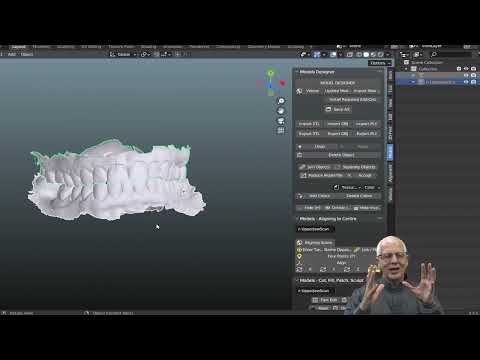
Tools such as Exoplan/Exocad, Blender for Dental, Nemoscan, and Medit Link serve different stages and purposes. Your choice should follow your professional goals, not just a platform’s popularity.
Should you invest in equipment or outsource the digital workflow?
Purchasing technology may make sense, but it is not the only way to get started. Many dentists can begin by using scanning services, laboratories, and digital treatment planning centers.
The decision should account for frequency of use, case complexity, available space, staffing, support, and the ability to evaluate workflow quality.
| Working model | Potential advantage | Key consideration |
|---|---|---|
| Outsource data acquisition, design, or fabrication | Access to digital workflows with a smaller initial investment in in-house infrastructure | Dependence on partners’ scheduling, communication, and turnaround times |
| Adopt a hybrid model | Bring the steps most useful to daily practice in-house | Need to integrate files, protocols, and responsibilities |
| Bring multiple steps in-house | Greater operational control over part of the workflow | Recurring costs, training, maintenance, and quality control |
No single model is best for every practice. A well-organized hybrid workflow may be more efficient than an extensive setup with underused equipment.
Calculate the total cost, not just the purchase price
The financial analysis should include licenses, updates, maintenance, supplies, training, storage, and labor time. In-house fabrication also involves post-processing procedures and controls appropriate to the material and its intended use.
The learning curve must also be considered. During the first few cases, a digital step may take longer than the previous process. Evaluate the investment based on tracked results, not expectations of an automatic return.
A step-by-step approach to growing with digital dentistry
A gradual transition allows for more controlled learning and helps keep resources focused.
1. Choose a recurring problem
Identify a specific challenge: incomplete communication with the laboratory, disorganized documentation, repeated records, or a need to improve prosthetically driven surgical planning.
Define what you want to improve. “Digitizing the practice” is too broad; “standardizing records sent to the laboratory” points toward actions you can verify.
2. Map your current workflow
Document the steps, responsible parties, deadlines, and points of failure. This helps distinguish technology problems from organizational problems.
If a laboratory prescription is incomplete or approval takes too long, purchasing equipment alone is unlikely to resolve the bottleneck.
3. Get training and select partners
Seek training related to your chosen workflow. When evaluating partners, consider communication quality, review criteria, traceability, and willingness to discuss limitations.
Agree in advance on required files, review responsibilities, and procedures for handling inconsistencies.
4. Start with cases that match your experience
Select situations with clear indications and opportunities to verify each step. Avoid taking on a complex new clinical technique, unfamiliar software, and a new fabrication process all at once.
Have alternatives available in case the digital tool cannot be used as planned.
5. Document, evaluate, and only then expand
Record challenges, adjustments, and reasons for repeating steps. Compare results with the previous process and turn what you learn into a simple team protocol.
Expand the workflow when it is consistent, not simply because the first few projects are exciting.
Practice management: how to measure digital progress
Connecting digital dentistry with career growth also requires considering the sustainability of your work. Technology needs to support a workable routine without adding costs and tasks the practice cannot absorb.
Useful metrics include:
- Time from record collection to treatment plan approval.
- Frequency of repeated scans or other records.
- Need for, and reasons behind, adjustments and remakes.
- On-time completion of each step.
- Total case cost, including outsourced services.
- Clinical and administrative time involved.
- Patient understanding of the proposed treatment.
These data should not be evaluated in isolation. Shorter appointments do not represent an improvement if they come with inadequate documentation or a greater need for corrections.
The team also needs to understand the process. Standardizing file names, organizing requests, and assigning responsibility for tracking approvals prevents the workflow from depending entirely on the dentist’s memory.
Patient communication and professional positioning
The strongest differentiation does not come from advertising that your practice has technology, but from explaining how you use it thoughtfully.
Instead of promising a “risk-free” or “perfect” procedure, explain the potential benefit and its limitations. Three-dimensional planning can help visualize anatomical relationships and support discussion of the treatment strategy, but it does not eliminate clinical variability or complications.
Digital images also need context. A simulation is a planning and communication tool, not a guarantee of an esthetic or functional outcome.
In professional marketing, follow applicable ethical standards, accurately represent qualifications, and observe rules governing image use. Avoid turning a patient into a commercial demonstration of a piece of equipment.
Data protection in digital dental workflows
Photographs, diagnostic studies, and files linked to patients require careful storage and sharing. Establish access controls, backups, and appropriate channels for exchanging information.
Handling these data must comply with applicable privacy laws and confidentiality obligations, including HIPAA where applicable in the United States and the LGPD in Brazil. Establish the appropriate legal basis for data use and review contracted service providers. Sharing only what is necessary and maintaining traceability are important parts of responsible practice.
In clinical practice
From the perspective of Dr. Welson Pimentel, a dentist with more than 30 years of experience, a doctorate in Clinical Dentistry from UFF, and a master’s degree in Prosthodontics, technology should remain subordinate to clinical reasoning. His work in implant dentistry, digital planning, and software instruction connects these tools to the practical demands of treatment delivery.
One concrete application of this principle is implant planning. The plan must relate the future prosthesis to available bone, soft tissues, surgical access, and the components that will be used. A visually organized design is not enough if these relationships have not been verified.
The same care applies to digital libraries and prosthetic components: compatibility should not be assumed simply because a connection looks similar. Identification, documentation, and verification are part of the work.
The career lesson is straightforward: dentists gain autonomy when they learn to ask good questions and review treatment plans. You do not need to perform every step personally, but you must understand what you are approving and which clinical checks remain necessary.
Have questions about your treatment? Book an assessment at Dr. Welson Pimentel’s dental practice in Botafogo, Rio de Janeiro, to discuss your needs and care options. Visit the dental practice
Conclusion
Growing with digital dentistry means developing skills, organizing processes, and choosing investments that fit your circumstances. Equipment and software are tools; the real differentiator is the ability to use them with clinical judgment, clear communication, and responsibility.
Start with a specific need, pursue training, establish partnerships, and track results before expanding. To discuss integrating digital treatment planning into your cases, consider speaking with Dr. Welson or exploring the support available through Planejamento Express.
Frequently asked questions
Do I need to buy a scanner to get started with digital dentistry?
No. You can start with scanning services, laboratories, and treatment planning centers. A purchase should account for demand, total costs, training, and usefulness in your daily clinical workflow.
What should my first digital dentistry course cover?
Prioritize training related to treatments you already provide, including case selection, record acquisition, and treatment plan review. Learning software commands without understanding the clinical fundamentals is not enough.
Does digital dentistry increase practice revenue?
It can improve efficiency and expand treatment opportunities, but it does not guarantee higher revenue. Results depend on demand, costs, clinical quality, practice management, and appropriate use of resources.
Does outsourcing digital treatment planning remove the dentist’s responsibility?
No. The treating dentist must assess the indication, provide adequate records, review the plan, and perform the necessary clinical checks. Each partner’s responsibilities need to be clearly defined.
Which digital skills matter most for career growth?
Creating high-quality records, understanding data integration, reviewing designs, communicating clinical objectives, and organizing files are essential skills. Software proficiency should develop alongside these capabilities.
How do I know whether bringing the digital workflow in-house is worthwhile?
Evaluate frequency of use, total cost, staff availability, support, and quality-control capabilities. Compare an in-house setup with outsourcing and a hybrid model before investing.
Dental care in Botafogo · Rio de Janeiro
Your smile deserves personalized care
Talk to Dr. Welson Pimentel about implants, prosthetics and oral health. An assessment is the first step toward understanding the right care for you.
- ✓ Dental implants
- ✓ Dental prosthetics
- ✓ Oral health