How a Dental Practice Partners With a Digital Treatment Planning Center
A digital dental treatment planning center connects your practice’s patient records with digital planning and custom device fabrication. Learn how to structure this partnership, assign responsibilities, and evaluate a provider.

A digital dental treatment planning center is a support provider that receives patient records, develops digital treatment proposals, and, depending on the contracted services, coordinates the fabrication of surgical guides, anatomical models, and prosthetic restorations. The partnership follows a sequence of submission, assessment, discussion, approval, and fabrication, without replacing the treating dentist’s diagnosis or clinical responsibility.
For a dental practice, the value of this partnership lies in accessing technical expertise and production capacity without necessarily bringing every tool and operation in-house. Results, however, depend on adequate records, clear communication, and defined criteria for moving forward at each stage.
What a Digital Dental Treatment Planning Center Does
The center turns clinical information and digital files into a plan that can be discussed, revised, and used during treatment. This involves more than operating software: it requires an understanding of treatment goals, anatomical limitations, and procedural requirements.
In implant dentistry, for example, implant position must be evaluated in relation to the future restoration, bone volume, soft tissues, and surgical access. A position that appears favorable on a CT scan may be unsuitable for the intended rehabilitation.
Depending on its capabilities and the contracted scope, a center may offer:
- Digital planning for implant placement.
- Custom surgical guide design.
- Design and fabrication of 3D anatomical models.
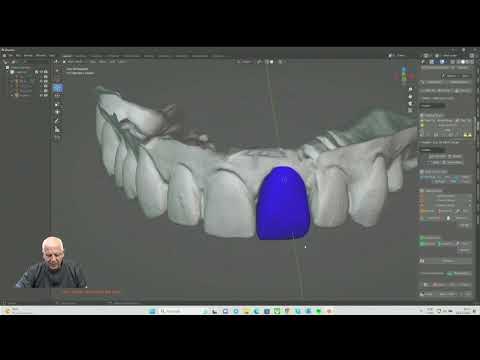
- Planning for crowns and provisional restorations.
- Integration of the diagnostic wax-up, anatomy, and proposed surgical plan.
- Support with selecting and verifying components and digital libraries.
- File preparation and submission for fabrication.
Not every center performs all of these activities. When selecting services, distinguish between planning, design, fabrication, and clinical and technical support, and identify who is responsible for each deliverable.
Read also: How to Move Beyond Dental Implant Price Wars by Communicating the Value of Guided Surgery · Implant Dentistry Conferences: How to Get the Most Out of Them · Bilingual Dentists: English and French in Dental Care
How the Partnership Between a Practice and a Planning Center Works
The workflow begins before files are submitted. The practice needs to explain the problem to be addressed, the proposed treatment, and the resources and conditions available for performing the procedure.
A center should not receive only a CT scan with a generic request for a guide. It needs context: the type of rehabilitation, condition of the remaining teeth, intended implant system, available instruments, and any limitations in mouth opening.
1. Defining the Case and Scope of Services
The first step is to document what will be delivered. A plan intended for clinical discussion is not equivalent to a ready-to-use guide, just as a prosthetic design does not necessarily include fabrication of the restoration.
The request should specify:
- Treatment site and goals.
- Planned procedure and alternatives under consideration.
- Digital and physical deliverables.
- The clinician responsible for clinical approval.
- Terms for reviewing and modifying the design.
- Turnaround time starting from receipt of complete documentation.
This definition helps prevent commercial expectations from being confused with technical feasibility.
2. Submitting Records for Digital Planning
Required records vary by case. Many guided surgery plans use CT imaging in DICOM format and surface scans in formats compatible with the chosen workflow, such as STL or PLY.
Photographs, bite registrations, a diagnostic wax-up, and information about existing prostheses may also be needed. For edentulous patients, the acquisition protocol may require specific tools or techniques to relate the anatomy to the proposed prosthetic plan.
The practice should confirm the protocol before ordering new imaging or obtaining new records. Incomplete files, significant artifacts, and insufficient surface data can prevent reliable integration.
3. Checking Documentation and Integrating Files
The center verifies whether the submitted material is sufficient to proceed. This screening includes evaluating anatomical coverage, file quality, consistency between records, and availability of technical information.
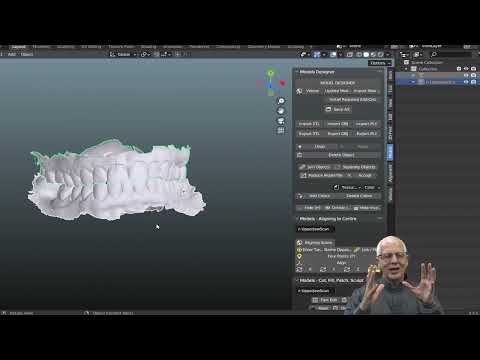
Registration of the CT data and surface scan deserves particular attention. A visually convincing overlay is not enough: its consistency must be checked across different regions, and situations requiring new records must be recognized.
When a significant limitation is identified, pausing the workflow to request additional information is a safety measure, not a productivity failure.
4. Developing and Discussing the Plan
Once the records have been validated, the center prepares a proposal. For guided surgery, this may involve implant positions, relationships to anatomical structures, guide design, support areas, fixation, and compatibility with the surgical instruments.
The discussion must account for actual clinical execution. It is necessary to assess whether there is enough room to insert drills and instruments, whether the guide will be stable, and whether the prosthetic plan is compatible with available components.
Key decisions should be presented clearly through images, reports, or a review meeting, depending on the complexity of the case.
5. Documented Approval and Fabrication
Fabrication should begin only after the responsible clinician explicitly approves the final version. The record must make it possible to identify which design was approved and which changes were incorporated.
If the implant, instruments, components, or clinical strategy change after this stage, the center must reassess the impact. An apparently minor substitution can alter clearances, fit, and depth references.
Production controls, device identification, and handling and processing instructions appropriate to the material must also be defined.
6. Receiving and Inspecting the Materials at the Practice
When the materials arrive, the team checks identification, integrity, and correspondence with the approved case. Before use, the dentist verifies fit, seating, stability, and compatibility with the surgical instrument system.
Delivery of the guide does not eliminate the need for clinical judgment. If a significant discrepancy is found, the device should not be used until the cause has been clarified and a safe course of action has been established.
Who Does What in Outsourced Dental Treatment Planning
The partnership works best when responsibilities are explicit. The table below outlines an organizational model that should be adjusted to the contract and each participant’s actual role.
| Stage | Practice’s Role | Planning Center’s Role |
|---|---|---|
| Initial assessment | Examine, diagnose, and define treatment goals | Explain the service’s technical requirements |
| Documentation | Obtain and submit adequate, current records | Check file sufficiency and compatibility |
| Digital design | Provide context and discuss clinical decisions | Develop the proposal and identify technical limitations |
| Approval | Approve the final version for treatment | Record the approved version and production conditions |
| Fabrication | Confirm the contracted deliverables | Fabricate or coordinate production within the agreed scope |
| Clinical use | Inspect the materials and perform the procedure | Provide technical instructions and contracted support |
The dentist’s approval does not relieve the center of responsibility for the services it performs. Likewise, hiring a center does not transfer responsibility for patient care to that provider. Determining responsibility depends on professional duties, the facts, and applicable obligations—not solely on contract language.
When to Hire a Digital Dental Treatment Planning Center
Outsourcing may be useful for practices that want to incorporate digital tools but do not yet have the case volume, staff, or interest needed to keep every stage in-house.
It can also support clinicians who already use planning software and need to expand production capacity, discuss specific cases, or coordinate fabrication. It is not a solution limited to beginners.
External Planning Center or In-House Workflow?
The decision should involve more than purchasing equipment. An internal workflow requires training, library updates, maintenance, process validation, and staff availability to review each case.
An external center allows practices to purchase services as needed, but requires organized documentation and coordinated timelines. An in-house operation offers more direct control, provided the practice can consistently maintain quality.
A hybrid model is another option: the practice acquires the data and performs part of the planning while outsourcing review, design, or fabrication. The best arrangement maintains consistent technical standards without overburdening the team.
How to Choose a Digital Treatment Planning Center
A visually appealing portfolio can help you become familiar with a provider’s work, but it does not establish process quality on its own. During your evaluation, ask how the provider makes decisions and handles inconsistencies.
Technical Qualifications and Workflow Compatibility
Ask who develops the plan, who reviews it, and which activities require a licensed dentist’s involvement. Also verify the provider’s experience with the types of cases your practice intends to submit.
Compatibility must cover implants, components, guide sleeves, surgical kits, and digital libraries. Similar names or appearances do not establish technical equivalence.
For restorations supported by existing implants, correctly identifying the system and connection is especially important. Any uncertainty should be resolved before the final design is completed.
Communication, Revisions, and Support
Evaluate whether there is a clear channel for discussing the design and whether responses address your clinical questions. Ask how the provider handles change requests, insufficient files, and problems discovered when inspecting delivered materials.
A good provider does not promise that every case is feasible. Instead, it explains limitations, requests additional records when needed, and distinguishes issues that can be resolved digitally from those requiring an in-person reassessment.
Traceability and Data Protection
The partnership involves sensitive personal health information. The practice and center should define the purposes of data use, access permissions, transfer methods, storage, and disposal in accordance with applicable privacy laws and professional obligations. For services in Brazil, this includes the LGPD, Brazil’s General Data Protection Law.
Avoid sharing more information than necessary. It is also important to clarify whether third parties are involved in fabrication and how information is shared with them. Informed consent for treatment should not be confused with blanket authorization for any use of patient data.
Costs and Turnaround Times: What to Compare in a Proposal
There is no single fee that covers every service offered by a digital dental treatment planning center. Case complexity, deliverables, included revisions, and fabrication all influence the proposal.
To compare quotes meaningfully, check:
- Are planning and fabrication included together or priced separately?
- Which files, reports, and devices will be delivered?
- Which revisions are included in the scope?
- What happens if records need to be retaken?
- Do changes after approval require a new service agreement?
- How are shipping, support, and any necessary remakes handled?
Turnaround time also needs a clearly defined starting point. Counting from the first inquiry, when records are still missing, creates unrealistic expectations.
For practice management purposes, track approval time, requests for additional documentation, and causes of rework. These measures help assess the total cost of the partnership rather than only the price of each device.
In Clinical Practice
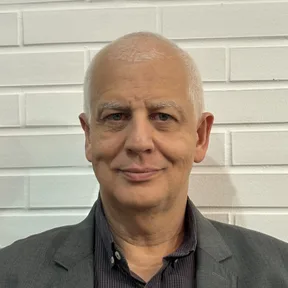
In Dr. Welson Pimentel’s clinical approach, informed by more than 30 years of practice and experience in prosthodontics, implant dentistry, and digital planning, the central question is not simply where to place the implant, but what rehabilitation is intended and under what conditions it will be carried out.
This perspective brings surgery and prosthetics together from the beginning. In addition to anatomy, the design must consider access for hygiene, restorative contours, maintenance options, and available components.
One situation requiring attention is changing the implant system after guide approval. Checking whether the new implant has similar dimensions is not enough: the digital library, guide sleeves, instruments, and protocol-specific depth references must also be reviewed.
Guide seating is another important consideration. When it does not match expectations, insisting on using the guide to stay on schedule is not a technical solution. The priority is to investigate the discrepancy and reassess the strategy.
Have questions about your treatment? Book an assessment at Dr. Welson Pimentel’s dental practice in Botafogo, Rio de Janeiro, to discuss your needs and care options. Visit the dental practice
How to Start a Partnership for Your Practice
To begin, select a case appropriate to your clinical experience and request the documentation protocol in advance. Assign someone to submit the files and someone to provide clinical approval if these roles are held by different people.
Before confirming the procedure date, coordinate the timeline for assessment, review, production, shipping, and inspection. Allow time to correct inconsistencies without turning every adjustment into an urgent request.
After delivery, document what worked and what needs improvement. This feedback helps standardize future submissions and makes the partnership more efficient without compromising technical diligence.
Have questions about your treatment? Book an assessment at Dr. Welson Pimentel’s dental practice in Botafogo, Rio de Janeiro, to discuss your needs and care options. Visit the dental practice
Conclusion
A digital dental treatment planning center can expand a practice’s access to digital workflows and help organize surgical and prosthetic cases. To achieve this, the partnership must combine adequate documentation, defined responsibilities, documented approval, and clinical inspection before use.
The best choice is not necessarily the fastest or least expensive proposal, but the one that offers a clear process, fits your practice, and is transparent about its limitations. To discuss a case or establish this workflow in your practice, contact Dr. Welson Pimentel and explore the planning options available through Planejamento Express.
Frequently asked questions
What is a digital dental treatment planning center?
It is a support provider that integrates clinical records and digital files to develop treatment plans and, depending on the contracted services, fabricates or coordinates the production of surgical guides, anatomical models, and prosthetic restorations.
Which files do I need to submit for guided surgery planning?
Many cases require CT imaging in DICOM format and surface scans, along with clinical and prosthetic information. The protocol varies by case and should be confirmed with the center before records are acquired.
Does the planning center take over the dentist’s responsibility?
No. The dentist remains responsible for diagnosis, treatment recommendations, clinical approval, and treatment delivery. The center is also responsible for the activities it performs, according to its role and applicable obligations.
Do I need an intraoral scanner to work with a planning center?
Not necessarily. Records may be acquired through partner providers or another protocol validated for the case. It is important to agree with the center in advance on how the data will be obtained and integrated.
How much do digital dental treatment planning services cost?
Pricing depends on case complexity, deliverables, revisions, and the fabrication services requested. Ask for a proposal that distinguishes planning, design, production, shipping, and support.
Can I change the implant after approving the surgical guide?
Any change must be communicated before use. The center and dentist need to reassess compatibility among the implant, digital library, guide sleeves, and instruments. The design may need to be revised and a new guide fabricated.
Dental care in Botafogo · Rio de Janeiro
Your smile deserves personalized care
Talk to Dr. Welson Pimentel about implants, prosthetics and oral health. An assessment is the first step toward understanding the right care for you.
- ✓ Dental implants
- ✓ Dental prosthetics
- ✓ Oral health